How to Choose Imported Candy When Labels Feel Unclear
Quick answer: If a candy label feels unfamiliar, start with format, flavor words, packaging size, and texture clues before guessing from the loudest color on the bag.
Start With the Eating Format
When an imported candy label feels unfamiliar, I do not start by pretending I can decode every word on the front of the package. I start with the eating format. Is it gum, a wafer, a lollipop, a soft filled candy, a dip candy, a salted fruit piece, or a chewy strip? That one question keeps the order from turning random. Format tells you whether the candy is quick, slow, messy, shareable, creamy, sharp, crunchy, or something you need to sit with for a minute.
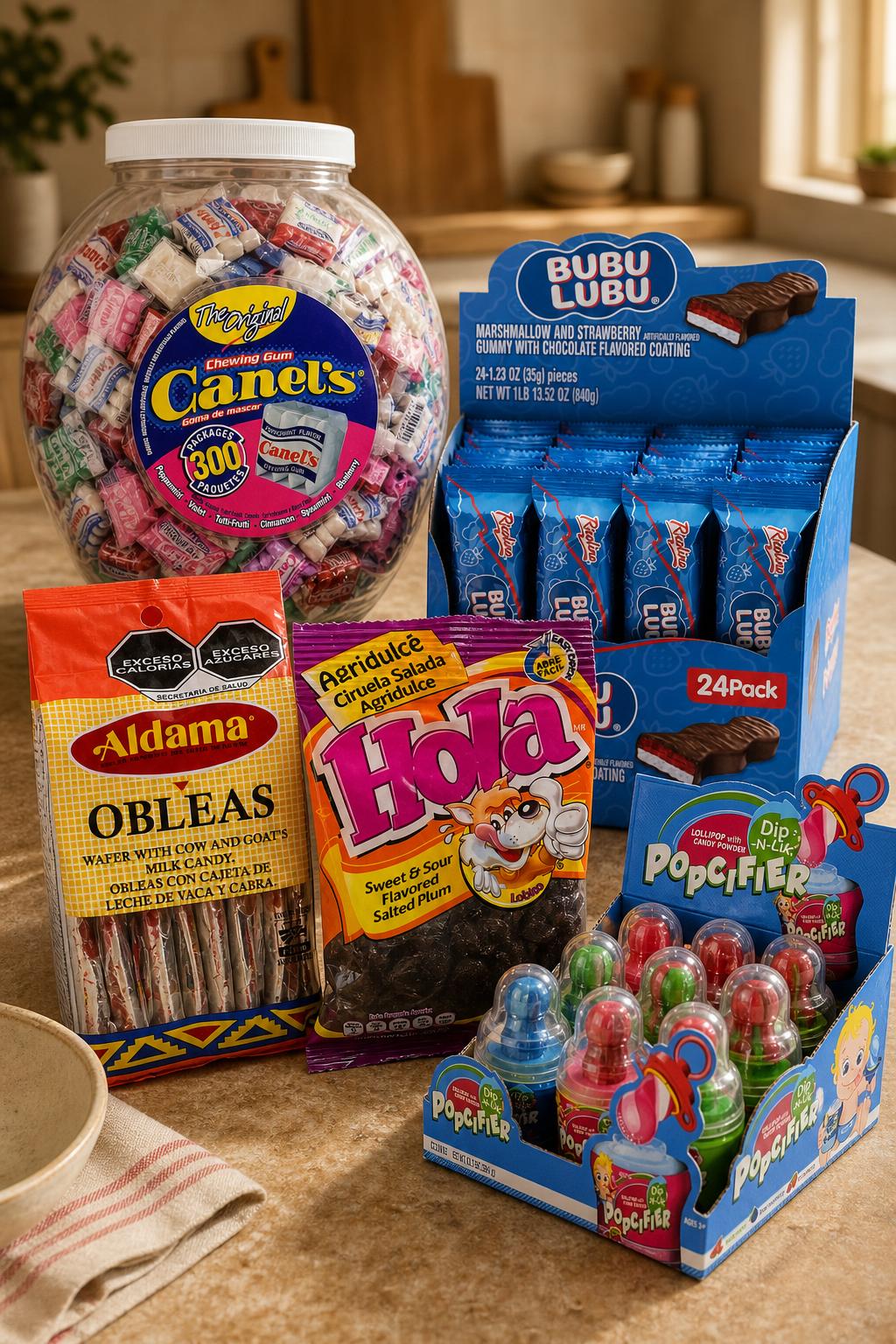
That matters because a bright package can make two completely different products look equally loud. A jar of Canel's Original Chewing Gum 300pcs Jar is not trying to do the same job as Hola Agridulce Sweet & Sour Flavored Salted Plum. One is a familiar gum format with a lot of individually wrapped pieces. The other is a more specific sweet-sour fruit experience. If you only react to color, you miss the entire point.
I also look for how much handling the candy needs. Wrapped gum and boxed sweets travel through a group differently than dip candy or soft fruit candy. That is not a quality judgment. It is just the practical side of choosing something you will actually open.
So my first rule is simple: name the format before judging the flavor. If the format already sounds like something you enjoy, the risk drops. If the format is new to you, keep the quantity and intensity in mind before you go big.
Shop the guide
 Reading How to Choose Imported Candy When Labels Feel Unclear? Start with Canel's Original Chewing Gum 300pcs Jar, then keep building from the same flavor lane.
Canel's Original Chewing Gum 300pcs Jar
Shop sour candy
Reading How to Choose Imported Candy When Labels Feel Unclear? Start with Canel's Original Chewing Gum 300pcs Jar, then keep building from the same flavor lane.
Canel's Original Chewing Gum 300pcs Jar
Shop sour candy
Use Flavor Words as Clues, Not Guarantees
Flavor words help, but I treat them as clues instead of promises. Mango, fresa, sandia, cajeta, chamoy, tamarind, agridulce, and chile all point you in a direction, but the format decides how those flavors land. Mango in a chewy candy does not feel the same as mango in a powder or a lollipop. Cajeta in a wafer is calmer and rounder than a sharp chile fruit candy. Agridulce tells me to expect sweet and sour tension, but the product still needs context.
Take Aldama Obleas con Cajeta 20pcs. The useful clues are not just the words. The package shows a wafer-and-cajeta format, so I know I am looking at something delicate, sweet, and layered instead of a chile-heavy challenge. On the other side, Dulces Ravi Crazy Mango 2oz sits in a fruit-and-chile world. Even before opening it, the package cues say this is a brighter, chewier, more direct kind of pick.
The mistake is treating one familiar word like the whole answer. Mango can be gentle, sharp, spicy, chewy, powdery, or sticky depending on the product. Read the flavor word, then read the format beside it.
Read Count and Package Size Honestly
Package size is where a lot of imported candy guesses go wrong. A 2oz bag, a 12ct box, a 20pc pack, a 24pc box, and a 300pc jar are not just different prices. They are different commitments. If you are trying a flavor style for the first time, a smaller bag can be the right move. If you already know the format works for your house, office, or party table, a larger count can make more sense.
That is why I look at Ricolino Bubu Lubu Chocolate Strawberry Marshmallow 24pcs differently from a tiny sample-size candy. A 24pc box says you should have a reason for that many pieces: sharing, repeat snacking, or knowing that chocolate, strawberry, and marshmallow is your kind of thing. The same logic makes the Canel's jar feel less risky for gum people, because gum is familiar and easy to hand out.
I do not think bigger is automatically smarter. Bigger is smarter when the format is useful. Smaller is smarter when you are testing a strong flavor, a new texture, or a product style you cannot compare to anything you already like.
Separate Everyday Picks From Curiosity Picks
The easiest way to make a better imported candy order is to separate everyday picks from curiosity picks. Everyday picks are the products you can imagine opening without thinking too hard: gum, creamy candy, chocolate, wafers, or individually wrapped sweets. Curiosity picks are the products that make you pause because the flavor, texture, or format is less familiar. Both belong in a good order, but they should not be judged by the same standard.
For me, Popcifier Dip-N-Lik 12ct is an interactive pick. It is built around dipping and playing with flavor, so I would not compare it to a simple chocolate bar. Hola Agridulce is also a curiosity pick if salted plum candy is new to you. It may be exactly what someone wants, but it asks for a different kind of attention than a marshmallow chocolate candy or a wafer.
This is also how I keep from blaming a good product for being the wrong choice. If you wanted calm and creamy, do not judge a sweet-sour plum like it failed. You picked the wrong role. Give every product a job before you buy it.
Quick cart path
Use these article picks as the buying shortcut instead of searching the whole store.
Canel's Original Chewing Gum 300pcs Jar Aldama Obleas con Cajeta 20pcs
 Ricolino Bubu Lubu Chocolate Strawberry Marshmallow 24pcs
Use Product Photos Like a Buyer, Not a Scroller
A product photo is not decoration. It is part of the label. I look for the package count, whether pieces are wrapped, whether the candy is loose in a bag, whether the product is a box or a jar, and whether the package shows an opened serving. Those details help more than vague internet descriptions. They tell me how the candy will behave when it leaves the package.
If I see a jar, I think about sharing and storage. If I see a small bag, I think about trial size and immediate snacking. If I see a 20pc or 24pc box, I think about repetition and whether the flavor is friendly enough for more than one person. If I see a dipping product, I expect a little more involvement. This is practical, not fancy. You are using the same visual clues you already use in a physical store.
That is why I like product pages with clear packaging images. The images for the products in this guide show real Shopify product packaging, not generic candy mood shots. Look at them before choosing. A few seconds with the photo can save you from ordering six things that all solve the same craving.
Pick a Mix of Familiar and New
A first imported candy order should not be all comfort and it should not be all chaos. I like a mix that gives you at least one familiar format, one gentle sweet product, one fruit-forward product, one interactive item, and one bolder flavor. That keeps the order interesting without turning it into a dare. The point is not to prove you can handle the weirdest thing on the shelf. The point is to learn what you actually like.
For a practical spread, Canel's covers gum, Aldama Obleas covers wafer and cajeta, Bubu Lubu covers chocolate-strawberry-marshmallow, Popcifier covers the interactive dip style, Dulces Ravi Crazy Mango brings fruit and chile, and Hola Agridulce brings sweet-sour salted fruit. That is six different jobs. None of them need to pretend to be the same product.
This approach also makes the next order easier. You are not just asking whether you liked a brand. You are learning whether you liked a format. Maybe wafers win. Maybe dipping candy is more fun than expected. Maybe salted fruit is too specific for you. That is useful information, and it beats guessing from package color alone.
Choose the First Product on Purpose
If you are still stuck, pick the first product by the question you most want answered. Want to know whether creamy Mexican candy is your thing? Start with Bubu Lubu or Aldama Obleas. Want a familiar format that still feels imported? Canel's gum is easier to understand because chewing gum does not need a long explanation. Want a product that feels more like a flavor experiment? Hola Agridulce or Dulces Ravi Crazy Mango gives you a clearer read on sweet-sour and fruit-chile territory.
I also pay attention to who will actually eat the candy. A solo order can take more risks because one curious product is not a problem. A shared order should include at least one recognizable format and one individually wrapped option, because people relax when something looks easy to grab. That is not boring. It is how you make room for the less familiar product beside it.
The worst method is buying only the packages that look loudest. Loud packaging can signal flavor, but it can also hide the practical question: do you want something chewy, creamy, crunchy, dipped, wrapped, or slow-lasting? Answer that first and the label gets less intimidating.
Know When to Slow Down
The honest move with unfamiliar candy is knowing when to slow down. If a product mentions a flavor style you have never tried, if the package count is large, or if the texture looks unusual, pause and read the product page. Check the title, photos, flavor words, and any available details before you add it to the order. Imported candy is more fun when you know what kind of surprise you are buying.
I am not trying to flatten everything into beginner candy. Strong flavors are part of the appeal. The point is to avoid fake confidence. If you are buying for yourself, take one bigger swing. If you are buying for a group, make sure there are easier products beside it. If you are buying for kids, coworkers, or a party, pay attention to mess, format, and individual wrapping before chasing the most intense-looking package.
I also avoid making taste promises that the package cannot support. If the page does not clearly tell me heat level, texture, or ingredients, I do not invent a story around it. I stick to what I can see: the brand, format, count, flavor words, and package style. That is enough to make a smarter choice without pretending every imported product comes with a perfect translation.
The best imported candy order feels intentional. You know which product is the safe share, which one is the creamy break, which one is the fruit hit, and which one is the wild card. That is how you turn unfamiliar labels into better choices without pretending every package is obvious at first glance.
Turn this read into a cart

Start with 6 linked picks from this guide, then add one safe pick and one discovery pick so the order has range.
Shop sour candyFeatured Products


Related Reads
- Lucas Candy Formats Explained: Powder, Dip, and Squeeze
- How to Keep Opened Gummy Candy from Turning Sticky
- Game Night Candy That Won't Wreck Cards or Controllers
- How to Decode Mexican Candy Flavors Before You Buy
Frequently Asked Questions
What should I check first on an imported candy label?
I check the format first: gum, wafer, lollipop, powder, filled candy, or fruit snack. Format tells me more about the eating experience than the loudest color on the package.
Does unfamiliar packaging mean the candy will be spicy?
No. Some imported candy is spicy, but plenty is creamy, fruity, minty, chewy, or caramel-forward. Look for flavor words and product style before assuming heat.
Is a large-count product a good first order?
It can be when the format is familiar, like chewing gum or individually wrapped wafers. For stranger textures, I usually start smaller unless I already know I like that style.
How do I avoid buying products that feel too similar?
Choose different formats on purpose: one creamy item, one fruit item, one interactive candy, one wafer or gum, and one stronger sweet-sour pick.
Should I use product photos when choosing imported candy?
Yes. Product photos help you spot serving style, package count, texture, and whether the candy is individually wrapped, boxed, bagged, dipped, or meant to be shared.
Can I choose imported candy without knowing every ingredient?
You can make a smarter first choice by reading flavor cues and format cues, but always check the live product page if ingredients or allergen details matter to you.
Save this guide for later