Chile-Lime Flavor: Why the Citrus Comes Before the Heat
Quick answer: Chile-lime is not a heat level with a citrus gimmick attached. The lime is doing the flavoring work, the chile is adding the warmth, and understanding the order of those two notes is the difference between buying a bag that tastes balanced and one that just tastes punishing.
Chile-lime is two flavors, not a heat level
Here is the thing nobody tells you when you first buy a bag of chile-lime peanuts: the lime is not a garnish, and the chile is not the point. It is a two-part flavor built in a specific order, and if you only taste the heat you are missing half of what you paid for.
I have eaten a lot of bagged chile-lime snacks for this shop, and the ones people describe as sour and spicy are usually the ones that were badly balanced, not the ones that were properly made. A good chile-lime bag tastes citrusy and salty first, then warm and chile-forward, and then the whole thing settles into something savory. The burn is the last note, not the opening note.
That ordering comes from how acid and capsaicin interact, and it is the reason this flavor reads as food instead of challenge. If you buy a chile candy expecting a wall of heat and instead get lime, the lime is not a gimmick. It is doing structural work.
Shop the guide
 Reading Chile-Lime Flavor: Why the Citrus Comes Before the Heat? Start with King Henry's Cacahuates Con Chile y Limon, then keep building from the same flavor lane.
King Henry's Cacahuates Con Chile y Limon
Shop sour candy
What the lime is actually doing to the chile
Chiles register as heat because capsaicin binds to the TRPV1 receptors that also respond to real heat, and your mouth reads that binding as burning. Citric acid, which is what lime juice is mostly made of, does something different. It floods the same sensory environment with sourness, and sourness competes for attention.
The practical result is that the chile still burns, but it gets buried under a layer of brightness. More importantly, acidity does not just mask heat, it sharpens everything around it. Salt tastes saltier. The roasted, slightly oily note in the nut comes forward. The chile aroma gets easier to smell, which is where most of the flavor actually lives, since a lot of what we call chile taste is aroma rather than burn.
And lime does a job on dry snacks that fresh juice could not. Real juice would spoil the bag. Dried lime and citric acid give the same sourness in a shelf-stable form, which is why nearly every commercial chile-lime seasoning uses both.
Where the pairing came from: botanas, elote, and fruit
Chile-lime is not a candy invention. It is one of the oldest flavor pairings in Mexican cooking, and it shows up long before it shows up in a bag of peanuts.
The format most people meet it in is the botana, which literally means a snack or a small bite. A botana is the mixed handful you get with drinks, and the canonical version of that handful is peanuts, seeds, and corn or churrito pieces, all carrying the same chile, salt, and lime seasoning. When you buy a bag labeled botanas con chile y limon, you are buying the flavor profile of that mixed handful rather than a single ingredient.
The same seasoning shows up on elote, the street corn, with lime and chile on top. It shows up on sliced fruit with chile and salt. That is the single most useful thing to understand: in Mexican eating, lime is the acid that makes salt and chile taste like a designed flavor instead of two separate seasonings sitting on top of food.
Chiles are native to the Americas. Limes arrived with the Spanish in the 1500s and became the default acid of what is now Mexican cooking, the same way vinegar became the default acid across much of Europe. Once both live in the same kitchen for four hundred years, pairing them is not clever. It is just what happens.
Where the lime goes when it is not a snack
Here is where candy gets interesting, and where the chile-lime logic gets adapted rather than copied.
In fruit-based chile candy, the citrus slot is usually filled by the fruit itself rather than by lime. A dried mango with chile is doing the same job a lime wedge does on elote: it supplies sweetness and acid that make the chile readable. The lime is the explicit version of that idea. The mango is the implicit version.
That is why a fruit chile candy and a lime-seasoned nut are not interchangeable, even though both get described as sweet, salty, and spicy. The fruit candy gets its brightness from sweetness first and acid second. The lime snack gets its brightness from acid first and sweetness not at all. If you like the sour-forward end, you want the lime versions. If you like the fruit-forward end, chase the mango and tamarind ones instead.
You also find the same pairing in the gummy aisle, where the chile arrives through a chewy shell and a flavored filling rather than a dry seasoning dust. It lands differently, but the order of the notes is the same: bright and sweet first, then warm.
Quick cart path
Use these article picks as the buying shortcut instead of searching the whole store.
King Henry's Cacahuates Con Chile y Limon King Henry's Garbanzo con Chile y Limon 5.25 oz
 King Henry's Botanas Con Chile y Limon
How to read a bag before you buy it
Most stores put a chile-lime bag in front of you with a photo of a grinning face and the word spicy in the biggest type on the package. That tells you almost nothing about the balance, so here is what I actually look at.
- Read the ingredient list for the acid. If you see citric acid, lime powder, or dehydrated lime listed right next to the chile, the bag is built around the sour-forward version. If you see sugar listed high and nothing citrus at all, you are buying a chile candy in a snack shape.
- Look for the seasoning style, not the heat claim. A dry dust on roasted nuts or seeds means the lime is seasoning. A wet or sticky coating means something else entirely.
- Check whether the fruit is the star. Mango, tamarind, and watermelon are named on the front because they are the flavor. Lime-named bags put the seasoning first, which means the seasoning is doing the work.
- Decide if you want the acid or the aroma. Citrus-first bags taste sharp on the tongue. Fruit-first bags hit harder on the nose and finish sweet.
- Skip the extra hot version on your first bag. That label changes the chile, not the lime, and the acid-to-heat ratio is usually what keeps a chile-lime bag from being punishing.
Six SRC picks and what each one tastes like
Everything below is currently in stock, and I have eaten every one of them more than once. They are not interchangeable and they are not in a ranking order, because they are not trying to do the same job.
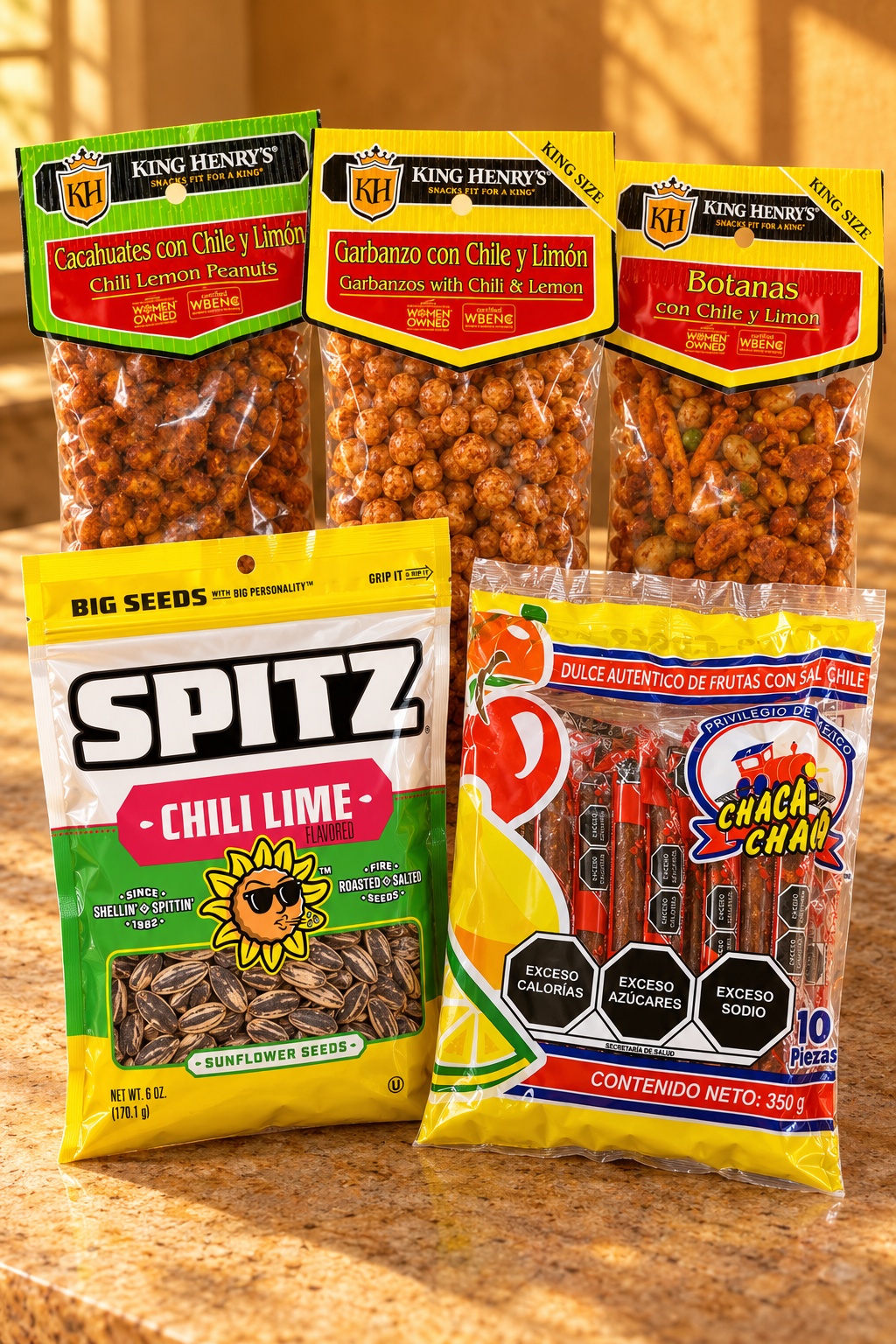
King Henry's Cacahuates Con Chile y Limon is the reference point. These are whole peanuts in a shell, roasted, with a dry chile and lime seasoning that tastes sharp on the tongue first. The nut is still a nut underneath it, which is exactly why the lime works so well here. If you want to understand the flavor, start here.
King Henry's Garbanzo con Chile y Limon swaps the peanut for the chickpea, and that changes the texture completely. The chickpea is denser and mealier, so the seasoning reads more like a spice rub than a coating. It is the most savory of the bunch and the one that keeps the lime most visible. There is also a habas con chile y limon version built on fava beans, which is softer and more buttery if you want a milder texture.
King Henry's Botanas Con Chile y Limon is the mixed handful and the most direct answer to what botana actually tastes like. Nuts, seeds, and corn pieces all carrying the same seasoning, so you get fat, crunchy, and soft bites with identical flavor on each one. It is also the most likely bag to disappear in one sitting.
Spitz Chili Lime Sunflower Seeds is the cleanest and most modern of the group. The seeds are small and uniform, the seasoning is a bright chile-lime dust, and there is almost nothing else in the way. It is the one I hand to people who want the flavor without a nut, and the best value on this list at under three dollars for six ounces.
Chaca Chaca Original Chile Fruit Candy is where the flavor system moves into candy. This one is fruit-first: the fruit taste arrives immediately, and the chile comes in behind it as warmth rather than as a burn. You are not tasting lime here, and that is not a flaw. It is the same principle with the roles reversed, and the most approachable thing on this list for someone who likes sweet and sour.
Lyzoo Mango Chili Burst Gummy runs the same idea as a chewy filled gummy, with a mango-flavored shell and a tangy chili filling in the center. The heat arrives in a burst instead of a build, which is why it is fun. It is what I would offer someone who thinks they do not like spicy candy yet.
How to eat it without ruining the bag
Two practical notes and then I will stop giving advice.
First, buy the smaller bag when you are trying the flavor for the first time. The flavor is strong but not aggressive, which means you will keep eating past the point where you meant to stop. Five ounces of peanuts is a lot of peanuts once the lime has made them interesting.
Second, keep the chile-lime stuff away from your chocolate and your plain salted stuff if you care about either. The seasoning dust travels and does not stop at the edge of the bag. Put the botanas in a bowl and the peanuts in a separate bowl. Mixed together, the peanuts taste like the corn and the corn tastes like peanuts.
Where people get it wrong
I will save you from the two mistakes I see most often.
The first is buying the extra hot bag first. Chile-lime is a flavor profile with a heat setting, not a heat product with a flavor profile. If you jump to the hottest version and then decide you hate chile-lime, you may just have disliked chile-lime with a chile problem on top of it. Get the plain one first, get comfortable, then decide whether you actually want more heat.
The second is assuming it will taste like a lime-flavored candy. Lime in a savory snack behaves like acid in a savory dish, not like citrus in a sweet. It sharpens and cuts. It does not taste like a lime drop. If you have only ever had lime-flavored sweets, the savory version will surprise you, and the surprise is not a defect in the product.
That is the whole explanation. The lime does the flavoring, the chile adds the warmth, and the order of those two is why this pairing has survived four hundred years and shows up in everything from street corn to dried mango to a three-dollar bag of seasoned peanuts.
Turn this read into a cart

Start with 6 linked picks from this guide, then add one safe pick and one discovery pick so the order has range.
Shop sour candyFeatured Products


Related Reads
- Why Salt Makes Mexican Candy Hit Harder Than Sweet
- Pickle Candy Trend 2026: Why Everyone's Suddenly Obsessed With Sour, Salty Snacks
- Sweet and Salty Mexican Candy: Why the Flavor Works
- Sunflower Seed Flavors Ranked: From Basic to Bold, Which Ones Actually Deliver
- How to Pick Candy That Does Not All Taste the Same
Frequently Asked Questions
What does chile-lime actually taste like?
It tastes citrusy and salty first, then warm and chile-forward, then savory. On a nut or seed bag you get a dry dust of chile and lime that hits the tongue sharply before the heat arrives. The burn is the last note, not the opening one, which is why good chile-lime snacks stay easy to eat long after a plain chile candy stops being fun.
Is chile-lime the same as Tajin?
Not exactly. Tajin is a powdered seasoning blend of mild chile, dehydrated lime, and salt, and it is built to be dusted on fresh fruit, corn, or the rim of a glass. A chile-lime snack bag applies the same idea, but the seasoning is pre-blended onto a roasted nut, seed, or chickpea and baked onto it. Same flavor logic, different delivery method.
Is chile-lime spicy or just salty?
Both, but the salt and the lime arrive before the chile does. The chile in these bags is usually a background warmth rather than a face-sweating burn, and the acid keeps it readable. If you are specifically chasing maximum heat, this is the wrong lane and you want a habanero or extra-picoso product instead.
Does the lime cancel out the heat in chile candy?
No. Sourness competes with the heat sensation and redirects it, so the chile still registers, it just stops being the only thing you taste. The lime does not neutralize capsaicin the way dairy or fat does. What it does is make everything around the heat clearer, including salt, nuttiness, and chile aroma.
What is the difference between botanas and a bag of peanuts?
Botanas are a mixed snack blend, usually nuts, seeds, and corn or churrito pieces, all carrying the same chile and lime seasoning. A peanut bag gives you one base ingredient with that seasoning on it. The mixed version is the more traditional format and the more interesting one to eat, because every handful has a different texture with the same flavor.
Is chile-lime a good first pick for someone who does not like spicy candy?
The lime versions are a reasonable starting point because the acid arrives before the heat and keeps it in check. If you are still nervous, start with the fruit-first options like Chaca Chaca or a mango chili gummy, where the fruit sweetness does the same job the lime would and the chile lands as warmth rather than pain.
Save this guide for later