Do You Need to Refrigerate Candy? What Actually Changes
Quick answer: The fridge is the wrong tool for most candy. Cold does not make a chocolate bar better, it makes it harder and dustier, and gummies and wafers actually suffer for it. Here is what each format needs and where it belongs.
Most candy does not need a refrigerator
The short answer is no, and the reason is a little annoying: the fridge is the wrong tool for almost every bag and bar people are trying to protect. Cold does not make candy better. It mostly makes it harder, drier, or dustier with condensation, and in a few cases it just moves the problem from melting to softening.
Commercial candy is engineered to be shelf stable. That is why it can sit on a pallet in a warehouse, ride in a delivery truck in August, and still taste like something you bought yesterday. The formats that genuinely need refrigeration are the ones with fresh dairy, cream filling, or a homemade liquid center, and almost none of those are what people are worried about at home.
What the fridge does change is texture. Chocolate firms up and goes dusty. Nougat turns rubbery. Toffee turns into a small rock. Gummies go hard in the fridge and then sweat when you bring them out. If you already know that about your candy, you do not need a refrigerator. If you do not know it yet, this guide will save you some bad texture.
Shop the guide
 Reading Do You Need to Refrigerate Candy? What Actually Changes? Start with 3 Musketeers Candy Bar 1.92oz, then keep building from the same flavor lane.
3 Musketeers Candy Bar 1.92oz
Shop sour candy
What a refrigerator actually changes
Three things change inside a candy when you move it between the pantry and the fridge: the fat in it, the water in it, and the air around it. Everything else is mostly instinct.
The fat is the easiest one to picture. Cocoa butter in chocolate starts to soften as it approaches body temperature, which is why a bar that feels solid in a cool room turns glossy and slumps in a parked car. Now put that same bar in a 38 degree fridge and the fat goes the other direction. It sets hard, and the surface can develop a pale film as cocoa butter migrates and re-crystallizes unevenly. Candy people call that bloom. It is a quality problem, not a safety problem, and it does not make a bar dangerous. It just makes it look dull and feel slightly waxy on the surface.
The water is the sneakier one. Gummies and chewy candies are mostly sugar plus a little water, held in a soft gel structure. That structure is what lets a gummy feel springy. When the water migrates out to the surface and the sugar crystallizes there, you get the sticky clump problem. Humidity does it. Cold does it too, indirectly, because condensation forms the moment you take a chilled container into a warm room.
The air is the reason for the rule nobody likes to hear: your fridge smells like last night's leftovers and raw onion. Chocolate picks up odors easily because it is fat, and fat holds on to smells. A week of onion proximity can follow a bar into your mouth for the rest of its life.
Chocolate bars: bloom is a temperature problem, not a safety one
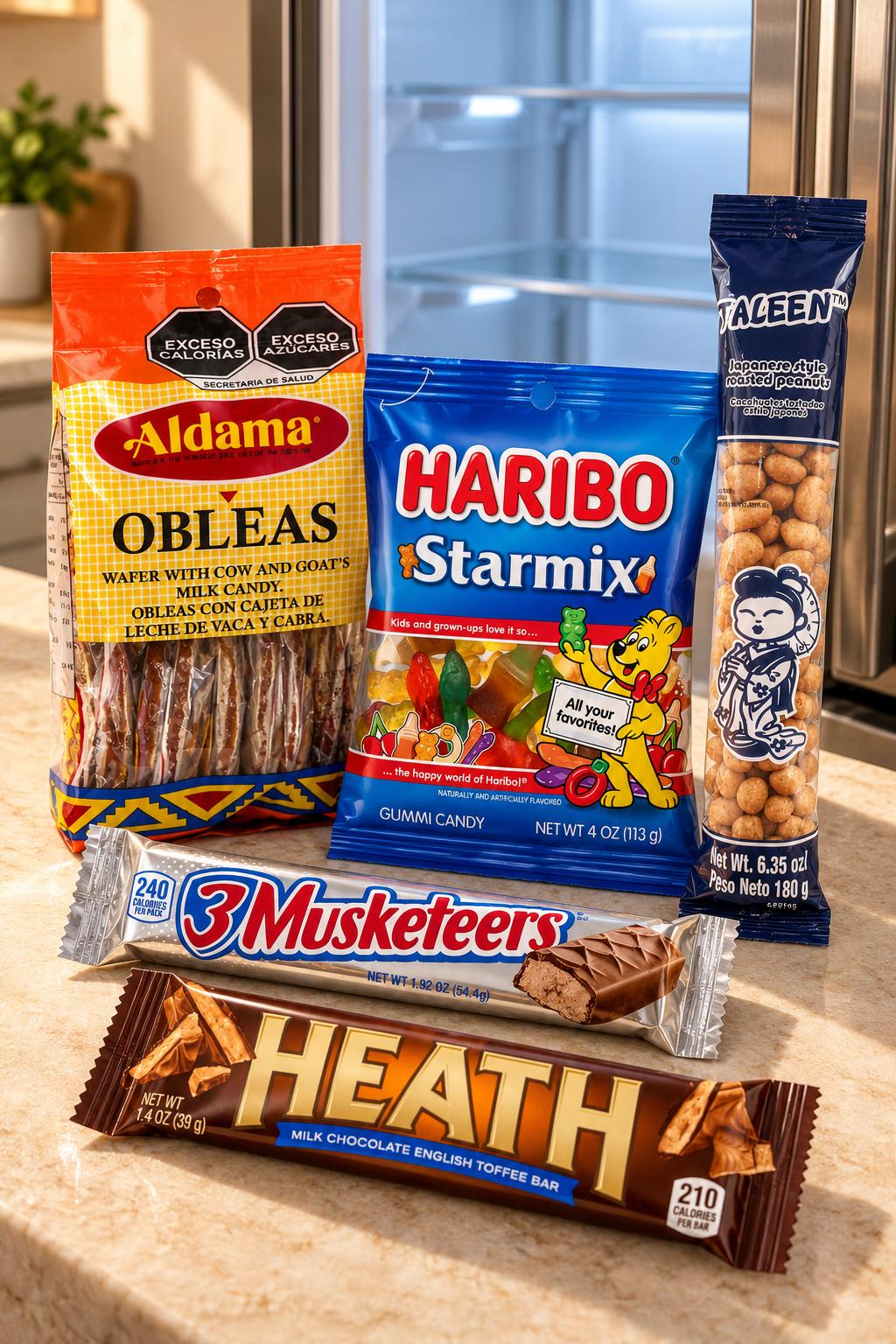
Start with the ones most people ask about. 3 Musketeers is a good case because it is two completely different textures in one wrapper: an airy marshmallow nougat under a thin milk chocolate shell. The nougat is mostly aerated sugar and fat, and that open structure is exactly what makes it temperature sensitive. Chilled, the nougat firms up and turns dense and rubbery. Warm, it goes tacky and slightly sticky against the wrapper. Sitting in a drawer at room temperature, it is neither.
The chocolate shell has its own issue. Heath is the better teaching example because it has a hard toffee center. Toffee is essentially cooked sugar, which means it has almost no water and a very high softening point. Cold, it is genuinely rock hard and you can chip a tooth. Warm, it relaxes into a chewy caramel that is not the product anymore. That is a texture problem, not a spoilage problem, so putting it in the fridge does not fix shelf life. It just moves the failure mode.
So if your kitchen is genuinely hot, or if you live somewhere with hot summers and no air conditioning, sealing chocolate airtight in a fridge is a reasonable move. Two rules come with it. Let it sit out on the counter for a while before you open the wrapper, because the condensation that forms when cold chocolate meets warm air is what causes gritty white sugar bloom. And keep it away from the raw onion, because nothing ruins a good bar faster than a fridge does.
Wafers and caramel: crispness does not survive humidity
This is the format where people are actively making things worse. Aldama Obleas con Cajeta are thin wafer shells with caramelized milk candy between them, and the wafer is doing something specific. It is a low moisture baked layer that is supposed to snap. Crispness in a wafer is not a flavor, it is a structure, and humidity erodes structure. Once the wafer takes on moisture it goes soft, then chewy, and then the whole thing is a sticky sandwich instead of a crack.
The mistake people make is putting them in the fridge. Cold slows moisture loss but it also pulls moisture out of the surrounding air and deposits it on the product when you open it. Every time the sealed pack goes from cold to warm, that is another condensation event. A cool, dry cabinet is better than a fridge for wafers, and keeping them in their individual wrappers matters more than the temperature does. Each of those 20 pieces is wrapped on its own, which is why a full pack stays good long after one loose wafer would have gone soft.
Quick cart path
Use these article picks as the buying shortcut instead of searching the whole store.
3 Musketeers Candy Bar 1.92oz Heath Candy Bar 1.4oz
 Aldama Obleas con Cajeta 20pcs
Gummies want dry and airtight, not cold
Gummies take the most fridge damage for the least benefit. Haribo Starmix is a good example of the standard gummy structure: fruit sugar, pectin or gelatin, and acid for flavor. The gel holds water in a network, and that network is what makes the candy feel bouncy. Once water leaves the gel and lands on the outside, you get the classic sticky-shoulder pile that fuses every shape in the bag into a single object.
Heat is the enemy here, and so is humidity, and both of those are exactly what a warm kitchen or a bathroom shelf gives you. A refrigerator is cold and often humid, and the cycle goes like this. The bag goes in cold and dry. The fridge humidifies it, so moisture collects on the inside of the container and on the candy surface. You take the bag out and the surface goes tacky against the air. You seal it again with that tackiness, and now it is worse than where it started.
For gummies, an airtight container in a cool cabinet beats a bag tossed on top of the fridge. If your kitchen runs hot, put the sealed container in the fridge but let it warm before you open it, and get it out before it sweats. USDA FoodKeeper guidance treats commercial gummy snacks as pantry items, not refrigerated items, which lines up with what you see in the wild: these bags sit on store shelves and in warehouse aisles with no cold chain at all.
Roasted nuts: the enemy is heat and light, not cold
Roasted nuts are the one category where a fridge is not crazy, but people get it wrong because they assume the fridge is what keeps nuts from going bad. Taleen Japanese Style Roasted Peanuts are a good stand-in because they are roasted and lightly coated, which means the oils have already been pushed through some of their most delicate flavor and are now sitting there vulnerable to oxidation.
Rancidity in nuts is an oxidation problem. Light, heat and air drive it, and the off flavors that come with it are grassy, papery and stale. A sealed bag in a cool dark cupboard slows that down a lot, and a fridge slows it down more. Condensation is the trade-off. If you fridge nuts, seal them properly, and if you live somewhere humid, that seal has to be airtight or you are trading rancidity for water damage.
The real mistake is not the fridge. It is leaving a bag in a hot car or on a sunny windowsill for a week and then wondering why it tastes stale. Keep them cool, keep them dark, keep them sealed.
Hard candy: the one thing that really is fine on the shelf
Hard candy is the easy case and it is worth saying plainly. Vero Rellerindos are a hard tamarind shell with a chili filling in the center, individually wrapped, 65 to a bag. Cooked sugar has almost no water in it, which is why hard candy has stayed shelf stable for a couple of hundred years, and why it does not care that your kitchen is 78 degrees in July.
The one thing to watch on a filled hard candy is the filling. The shell is inert, but the center is a smaller volume of material that can change texture over time, going hard and crystallized instead of soft and tacky. If a piece feels wrong, it is usually the filling and not the shell. Individually wrapped is also what makes a 65 count bag practical, because one crushed or sticky piece never ruins the rest of the bag.
The simple rule for your shelves
So here is the whole thing in one place. Chocolate and anything with real nuts or seeds in it goes in a cool, dark, dry cabinet, sealed against smells. Gummies go in an airtight container somewhere away from humidity, not in the fridge unless your kitchen is genuinely hot. Wafers go somewhere dry, and their individual wrappers are doing more for them than any temperature setting. Hard candy goes wherever there is room.
When you do put something in the fridge, you are buying time, not quality. A bar you eat at 70 degrees with a little condensation on it beats a bar you kept cold for a month and then let sweat in a warm kitchen. And if it does get a little bloom on it, that grey film is a temperature scar, not a safety problem. You can eat it. It just will not look like the one in the photo.
Honestly, the single most useful thing most people can do is buy less candy at once and keep it sealed. A smaller bag that you finish is better candy than a big bag that spends six months in a cupboard slowly going soft, dull and sticky.
Turn this read into a cart

Start with 6 linked picks from this guide, then add one safe pick and one discovery pick so the order has range.
Shop sour candyFeatured Products


Related Reads
- How to Keep Opened Gummy Candy from Turning Sticky
- How to Reseal Candy Bags After Opening Without Drama
- How to Organize a Candy Snack Drawer That Actually Works
- Outdoor Summer Candy Picks for Heat, Sharing, Cleanup
Frequently Asked Questions
Should candy be stored in the refrigerator?
Most commercial candy should not. Chocolate bars, gummies, wafers, toffee, hard candy and roasted nuts are all shelf stable, and the refrigerator actually damages several of them: chocolate goes hard and can develop a pale bloom, nougat turns rubbery, toffee turns rock solid, and gummies pick up condensation that makes them sticky. Store them in a cool, dry, dark cabinet instead. The exceptions are candies with fresh dairy, cream filling or liquid centers, and homemade candy that can actually spoil.
Is chocolate with white streaks still safe to eat?
Yes. That pale grey or white film is bloom, which happens when cocoa butter migrates to the surface and re-crystallizes after a temperature swing, or when moisture dissolves surface sugar and it crystallizes into gritty specks. It is a quality and appearance issue, not spoilage, and bloomed chocolate is safe to eat. Real mold would look fuzzy and patchy rather than smooth and film-like.
Do gummies need to be refrigerated?
No, and the fridge is usually the worst option. Gummies are a water-and-sugar gel, so they go sticky when that water migrates to the surface. A refrigerator is cold but often humid, and condensation forms every time a chilled container meets warm air, which is how a sealed bag of gummies turns into one fused clump. Keep them in an airtight container in a cool cabinet away from humidity. If your kitchen is genuinely hot, refrigerate them sealed and let the container warm before opening it.
Why does my candy turn white after being in the fridge?
That is sugar bloom, and it is mostly the fridge's fault. Cold chocolate plus warm humid air creates condensation right on the surface. The moisture dissolves a thin layer of sugar, and when it dries the sugar re-crystallizes as gritty white specks. Fat bloom is the other version, caused by heat instead, and looks like a smooth grey film rather than gritty specks. Both are cosmetic. To avoid it, let chilled candy sit at room temperature before you unwrap it, and keep the fridge to 38 to 40 degrees rather than turning it colder.
Do wafers and cookies stay crisp in the refrigerator?
They actually do worse there. A crisp wafer is a low moisture baked layer, and humidity softens it. A refrigerator is cold and often humid, so chilling wafers pulls moisture from the surrounding air and deposits it on the product every time you open the container. A cool dry cabinet is a better home for wafers, and keeping them in their individual wrappers matters more than the temperature does, because one loose wafer that goes soft can spread its moisture to its neighbors.
How long does candy actually stay good once opened?
For most commercial candy, the limit is quality rather than safety. USDA FoodKeeper guidance treats gummy fruit snacks as pantry items at roughly six to nine months unopened and solid chocolate as pantry storage at one to two years unopened, with about a year after opening for best quality, and those are quality windows rather than hard safety cutoffs. In practice, opened gummies, wafers and chocolate are usually fine for months in a cool dry cabinet, and hard candy keeps essentially indefinitely. Discard anything that smells off, looks wet, or has fuzzy mold.
Save this guide for later