How to Organize a Candy Snack Drawer That Actually Works
Quick answer: A good candy snack drawer is not about stuffing every empty space. It works when the products are visible, the formats are separated, and the first thing you grab still feels intentional.
Start With the Problem: The Drawer Has to Be Usable
A candy snack drawer sounds simple until it becomes the place where good snacks go to disappear. I have seen the same pattern too many times: somebody buys a few fun bags, drops them in a drawer, adds more the next week, opens two of them, forgets which one is fresh, and suddenly the whole thing feels like a sticky junk drawer with better packaging. That is not a snack system. That is a candy graveyard with handles.
The fix is not buying more candy. The fix is making the drawer easier to read at a glance. When I build a drawer for a desk, office, gaming setup, dorm room, or kitchen side cabinet, I want three things: sealed products up front, opened products separated, and enough texture variety that every grab does not feel like the same gummy in a different color. That matters more than having a giant pile.
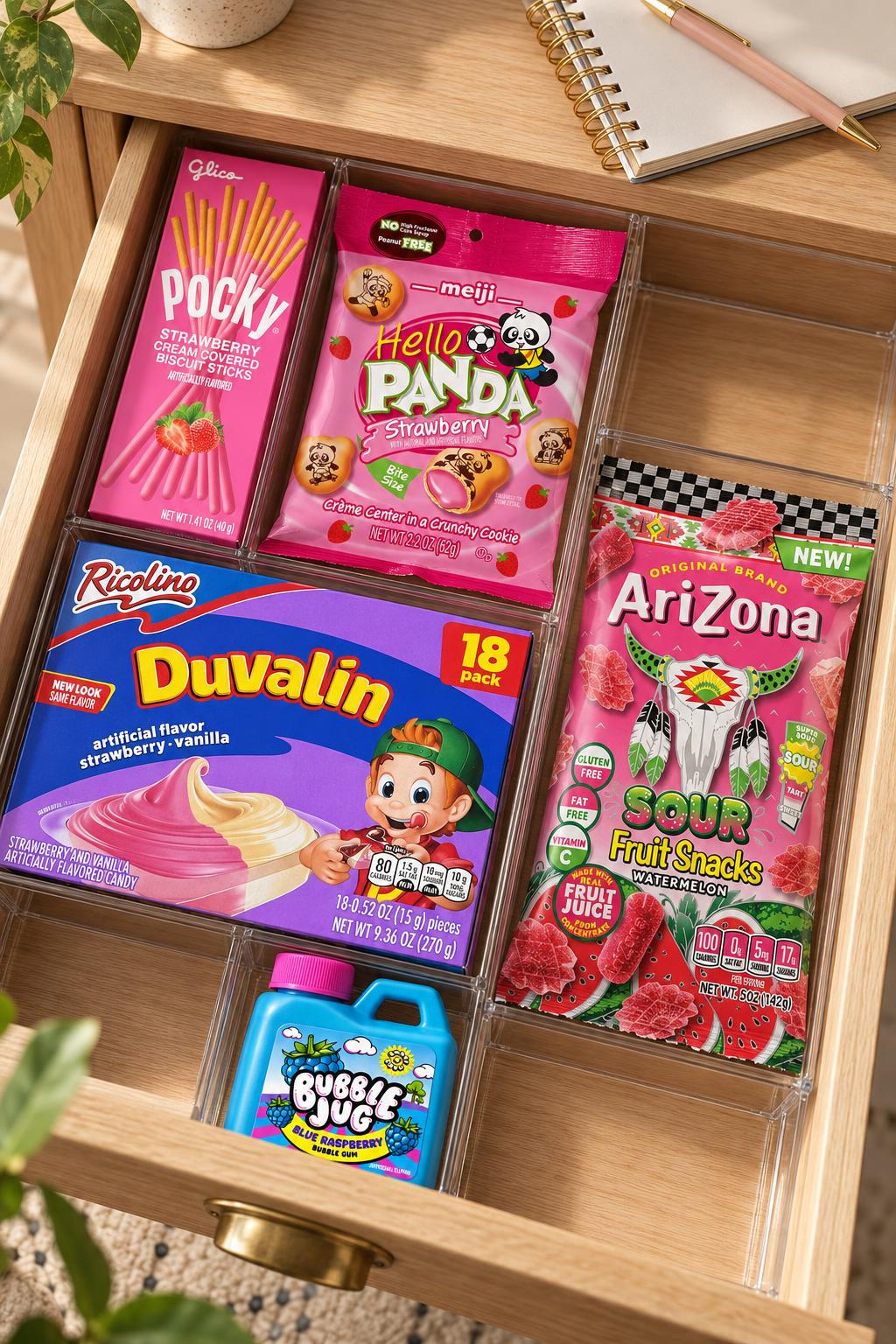
For this guide, I am treating the drawer like a small everyday station, not a party table. The best products are compact, easy to identify, and different enough from each other that the drawer solves actual cravings. A box of Glico Pocky Strawberry handles the crisp cookie-stick mood. AriZona Sour Watermelon Fruit Snacks handles the softer sour-fruit mood. Those are not competing for the same job, and that is the whole point.
Shop the guide
 Reading How to Organize a Candy Snack Drawer That Actually Works? Start with Glico Pocky Strawberry Cream Covered Biscuit Sticks 1.41oz, then keep building from the same flavor lane.
Glico Pocky Strawberry Cream Covered Biscuit Sticks 1.41oz
Shop sour candy
Reading How to Organize a Candy Snack Drawer That Actually Works? Start with Glico Pocky Strawberry Cream Covered Biscuit Sticks 1.41oz, then keep building from the same flavor lane.
Glico Pocky Strawberry Cream Covered Biscuit Sticks 1.41oz
Shop sour candy
Use Zones Instead of a Loose Pile
The easiest snack drawer upgrade is also the least glamorous: divide it into zones. You do not need fancy containers. A few shallow trays, clean cardboard dividers, or small bins are enough. I like one zone for crisp or cookie products, one for chewy candy, one for gum or longer-lasting picks, and one small front zone for anything already opened. The opened zone is important because it stops people from tearing into new products while half-finished ones sit underneath.
A product like Meiji Hello Panda Strawberry Cookies belongs in the crisp zone with Pocky because the packaging is easy to see and the eating experience is cleaner than loose candy. Bubble Jug Blue Raspberry Bubble Gum should sit in a different zone because it is more interactive and longer-lasting. If those two products are thrown together with opened gummy bags, the drawer looks full but nobody can make a quick choice.
I also keep strong flavors away from delicate cookie boxes when I can. That does not require panic or lab-level storage. It just means the chile, gum, sour, and creamy products should not all be pressed into one crushed corner. Candy packaging is still packaging, and packaging gets scuffed when the drawer is treated like a junk bin. A small amount of space between formats makes the whole drawer feel cleaner.
Put the tallest boxes or tubs at the back, lay flatter packs where the labels face up, and keep small pieces from sinking to the bottom. That last part sounds fussy, but it is where snack drawers fail. If a small pack disappears under a larger bag, it might as well not exist. Visibility is what keeps the drawer moving.
Build Variety by Format, Not Just Flavor
Most people think variety means strawberry, watermelon, blue raspberry, mango, and cherry. That is only flavor variety. It helps, but it is not enough. If every product is a soft fruity chew, the drawer gets boring even if every bag has a different color. Format variety is stronger because it changes how the snack feels in your hand and how long it lasts.
I would rather have one cookie stick, one filled cookie, one creamy dip, one soft sour fruit snack, one gum, and one playful candy than six bags of gummies. Ricolino Duvalin Strawberry-Vanilla is useful here because it brings a creamy spoonable format without acting like another sour chew. It is a better drawer pick when you want something slower and calmer than a sour bite.
The other advantage is portion honesty. A single box or small pack tells you what you are opening. A giant mixed pile encourages grazing without thinking, which is how the best products get buried and the weakest ones sit around forever. I want the drawer to ask a clean question: do you want crisp, creamy, sour, gum, or something playful? When the answer is that obvious, people stop digging like they are searching for treasure.
The Jolly Rancher Crayon Variety Pack covers a different kind of eating without making the whole drawer messy. It is a squeeze-style novelty, so I would not stack it directly over delicate cookies, but it earns a spot because it gives the drawer a product people actually notice. The trick is to include novelty without letting novelty take over. One or two interactive picks are fun. Six interactive picks become chaos.
Quick cart path
Use these article picks as the buying shortcut instead of searching the whole store.
Glico Pocky Strawberry Cream Covered Biscuit Sticks 1.41oz Meiji Hello Panda Strawberry Cookies 2.2oz
 Ricolino Duvalin Strawberry-Vanilla 18pcs
Make the First Row the Decision Row
The front of the drawer should do the decision work. I call it the first row because it is the part you see before digging. Put one product from each major texture there: crisp, creamy, chewy, gum, and sour. If the first row is balanced, the drawer feels useful even when the back is just backup stock. If the first row is random, people will rummage, crush soft packs, and open the wrong thing.
This is where smaller packages beat giant bags. A tight first row with Pocky, Hello Panda, Duvalin, AriZona fruit snacks, Bubble Jug, and Jolly Rancher Crayon tells you exactly what kind of snack you can have. You can grab something crisp, creamy, sour, chewy, or longer-lasting without doing an inventory check. That is the feeling a good snack drawer should create.
I also like keeping one boring backup space behind that first row. Not boring as in bad, boring as in predictable. That back space is where sealed duplicates or slower-moving products live until the front needs them. If everything is treated like the main attraction, the drawer gets noisy. If the front row makes the choice and the back row simply supports it, the whole setup stays easier to maintain.
If you share the drawer, the first row also keeps people from destroying the system. Nobody wants a lecture before taking candy. The organization has to be obvious enough that a normal person can follow it without asking. Labels can help, but visible packaging helps more. The product itself should explain the choice.
Keep Opened Products on a Short Clock
Opened candy needs a different rule than unopened candy. Once a bag or box is open, it should move to the front and get finished before the drawer gets more crowded. I am not making dramatic freshness claims here. I am just being practical: opened snacks pick up crumbs, lose their neat shape, and start looking less appealing when they sit under sealed packages. People avoid them, then open something new, and the drawer quietly gets worse.
Use a small clear bin, a clip, or a resealable bag for opened items. Put that bin at the front left or front right, not in the back. If the product is a box, fold it closed cleanly. If it is a pouch, clip it. If it is a dip-style product, keep the pieces together so the next person does not find half of the experience and assume the rest vanished.
A weekly thirty-second check is enough. Pull the open bin forward, toss empty wrappers, close anything that was left loose, and move one sealed product into the first row if the drawer looks thin. I would rather do that tiny check than rebuild the drawer from scratch every month. Good organization is boring in the best way: it keeps the snacks in rotation without turning candy into a chore.
This rule also keeps buying honest. A drawer that always has four half-open products does not need more candy yet. It needs a cleanup pass. Finish the open items, wipe the drawer, then add one new format that changes the mix. That habit saves money and makes the next order smarter.
The SRC Drawer Mix I Would Actually Use
If I were building a compact candy snack drawer from SRC right now, I would keep it to six products and make every slot earn its place. Glico Pocky Strawberry gives you a crisp, neat box. Hello Panda Strawberry adds a filled cookie bite that still feels clean. Duvalin Strawberry-Vanilla brings creamy contrast. AriZona Sour Watermelon Fruit Snacks covers the soft sour slot. Bubble Jug Blue Raspberry gives the drawer a longer-lasting gum moment. Jolly Rancher Crayon Variety Pack adds the playful squeeze format without turning the whole drawer into a sticky project.
That mix works because the products do not all answer the same craving. It also works because each package is visually distinct. You can scan the drawer, pick a mood, and close it again. That is my standard for a snack drawer that actually earns the space it takes up.
The anti-corporate answer is that you do not need a lifestyle system, a giant organizer, or a fake-perfect pantry photo. You need a drawer that makes candy easy to choose and hard to waste. Keep it visible, keep it varied, finish what is open, and stop buying five products that do the same job.
Turn this read into a cart

Start with 6 linked picks from this guide, then add one safe pick and one discovery pick so the order has range.
Shop sour candyFeatured Products


Related Reads
- Imported Candy Labels: Shop Smarter Without Guessing
- How to Reseal Candy Bags After Opening Without Drama
- How to Pick Candy That Does Not All Taste the Same
- Candy Value Math: Price Per Piece vs Flavor Variety
Frequently Asked Questions
What belongs in a candy snack drawer?
Start with sealed, easy-to-grab products that do not need a bowl or a full table setup. I like mixing cookie sticks, small gummies, gum, dips, and one novelty format so the drawer has actual choices instead of six versions of the same bite.
Should chocolate go in a snack drawer?
Only if the drawer stays cool and the chocolate will move quickly. If the drawer sits near a sunny window, heater, gaming PC, or hot car, I would keep chocolate somewhere cooler and use sturdier formats in the drawer.
How do I keep opened candy from getting stale?
Clip or fold bags tightly, keep opened items in a small bin at the front, and finish those before opening three more. The big mistake is mixing opened and unopened products until nobody knows what is still worth eating.
How many candy types should one drawer have?
Five or six types is usually plenty. More than that starts looking fun for a day, then turns into clutter. The point is range: creamy, crunchy, chewy, sour, gum, and one interactive pick.
Can a candy snack drawer work for an office?
Yes, but choose cleaner products and separate shared items from personal ones. Individually portioned pieces, boxes, and wrapped packs are easier than sticky open bags when coworkers are grabbing snacks between meetings.
What is the biggest snack drawer mistake?
Buying only by flavor instead of format. A drawer with five fruity gummies still feels repetitive. A drawer with cookies, fruit snacks, gum, dips, and chewy candy gives people a real decision.
Save this guide for later