Imported Candy Labels: Shop Smarter Without Guessing
Quick answer: Imported candy gets easier when you read the package for flavor words, format, heat cues, and serving style before you judge the brand name.
Start With the Label Problem
Imported candy shopping can feel weirdly dramatic when the package is louder than the information you recognize. I do not mean that in a precious way. I mean you are staring at a bright bag, box, or tray with a flavor name you half know, a brand name you may not know at all, and a product photo that is doing more work than the copy. That is where bad orders happen. People panic, pick the most familiar-looking thing, then act surprised when five different items land in the same sour-spicy corner.
The better move is slower and less glamorous: read the label like a map. I look for three things before I care about the brand. First, what flavor is being promised. Second, what format I am actually buying. Third, how much heat, sourness, or stickiness the package is hinting at. That takes the guesswork out of imported candy without turning it into a corporate tasting chart. You are still buying snacks. You just are not letting packaging noise make the decision for you.
Shop the guide
 Reading Imported Candy Labels: Shop Smarter Without Guessing? Start with Vero Pica Fresa Paleta 12ct, then keep building from the same flavor lane.
Vero Pica Fresa Paleta 12ct
Shop sour candy
Reading Imported Candy Labels: Shop Smarter Without Guessing? Start with Vero Pica Fresa Paleta 12ct, then keep building from the same flavor lane.
Vero Pica Fresa Paleta 12ct
Shop sour candy
Read Flavor Words Before Brand Names
Brand names matter once you know the shelf, but flavor words are usually the first useful clue. If a package says mango, fresa, sandia, pina, chamoy, or tamarindo, I pause there. Mango usually points fruity and tropical. Fresa is strawberry. Sandia is watermelon. Pina is pineapple. Tamarindo tells me to expect a deeper tart fruit flavor, not just regular sour candy. Chamoy points toward a sweet, salty, tangy, chile-friendly profile. None of those words guarantee the exact intensity, but they keep you from treating every bright Mexican candy package like the same thing.
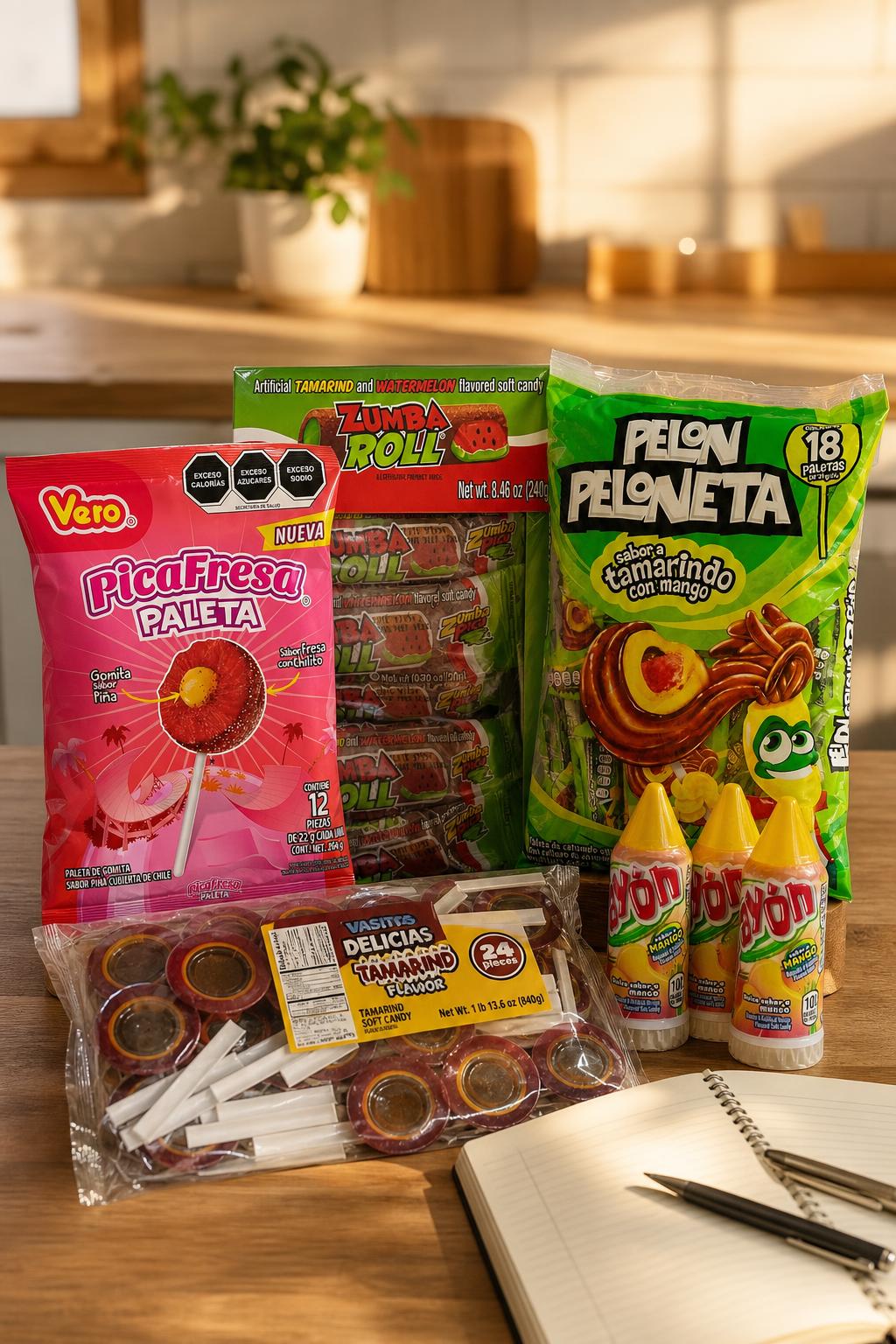
That is why I like using real products as translators. Dulces Ravi Crazy Pina 2oz gives you the pineapple clue right in the name, so I expect fruit before anything else. Vero Pica Fresa Paleta 12ct tells me strawberry and lollipop before I think about heat. That is not fancy analysis. It is just refusing to buy blind.
Format Tells You How It Eats
A label can be unfamiliar and still show you the format clearly. Paleta means lollipop. Cups, trays, sticks, rolls, and squeeze-style containers all point to a different eating experience. I care about that because the format decides whether a candy is a quick taste, a long snack, a spoonable treat, or something you should probably not open over a keyboard. People obsess over flavor and ignore format, then blame the candy when the real problem was the wrong use case.
Take Pelon Peloneta Tamarindo 18ct. The name points to tamarind, but the lollipop format matters just as much because it slows the snack down. Compare that with Vasito Delicias Tamarind Cups 24pcs, where the cup format signals a softer, more scoopable experience. Same broad flavor family, very different expectation. If you only read tamarind, you miss half the decision.
Treat Heat Like a Dial
I do not like the fake tough-guy approach to chile candy. Everything gets flattened into mild or brutal, and that is lazy. Heat in candy works more like a dial. Sometimes it sits behind fruit. Sometimes it rides with salt and tang. Sometimes it is the main point. The label usually gives you hints if you stop looking for a warning sign and start looking for the role heat is playing.
Words like pica, chile, fuego, chamoy, and tamarindo do not all mean the same thing. Pica can signal a spicy-tangy direction. Chamoy can be fruity, salty, and tangy before it feels hot. Tamarind can taste bold without being a dare. That is why Zumba Pica Zumba Roll Tamarind & Watermelon 12pcs reads differently from a plain fruit chew even before you open it. The roll format, watermelon cue, and tamarind cue all help set the expectation.
Quick cart path
Use these article picks as the buying shortcut instead of searching the whole store.
Vero Pica Fresa Paleta 12ct Zumba Pica Zumba Roll Tamarind & Watermelon 12pcs
 Pelon Peloneta Tamarindo 18ct
Use Familiar Shapes as Translation Help
When the words are unfamiliar, the shape can help. A lollipop is not mysterious. A cup is not mysterious. A roll is not mysterious. A small box with individually packed pieces tells you something different from a loose bag. I use those clues because they are practical. They help me decide whether the candy belongs with a slow snack, a quick taste, a shared bowl, or a personal stash. The package is already answering some of the question if you let it.
This is also where product photos matter. I want real packaging, not a fake lifestyle image that hides the actual item. If the product image clearly shows the count, the front label, and the format, I can shop with fewer surprises. Jolly Rancher Crayon Mango 3pcs is a good example because the crayon-style format tells you it is not a normal wrapped hard candy. You are buying an interactive soft candy format, and that changes where I would use it.
Six Products That Make the Clues Clear
If I were teaching someone how to read imported candy labels, I would use products that each show a different clue. Vero Pica Fresa Paleta 12ct is the fruit-plus-lollipop lesson: fresa tells you strawberry, paleta tells you the format, and pica tells you not to expect plain strawberry sweetness. Pelon Peloneta Tamarindo 18ct is the tamarind-and-time lesson because the lollipop format makes the flavor unfold more slowly.
For softer formats, I would put Vasito Delicias Tamarind Cups 24pcs next to Zumba Pica Zumba Roll Tamarind & Watermelon 12pcs. Both help explain that tamarind is not one single experience. One reads more like a cup format; the other reads as a rolled candy with a fruit pairing. Dulces Ravi Crazy Pina 2oz covers the pineapple clue, and Jolly Rancher Crayon Mango 3pcs covers format surprise. Together they make a useful label-reading spread without pretending every product needs to do the same job.
Check the Count Before You Commit
Count is part of the label too, and I think shoppers ignore it because it feels less fun than flavor. A 12ct, 18ct, 24pcs, or 3pcs label changes the decision. A smaller pack is easier when you are testing a new flavor. A bigger count makes more sense when the format is individually portioned or when you already know you like that style. I am not saying bigger is automatically better. I am saying the count should match the confidence level.
This is where imported candy gets less intimidating. You do not need perfect fluency. You need enough clues to know whether you are buying a small experiment, a shareable pack, or a product you should save for people who already like chile, tamarind, or chamoy. The label is not just decoration. It is telling you how much of the experience you are signing up for.
What I Would Skip When I Am Unsure
When I am unsure, I skip anything where the product photo hides the format. I want to see the wrapper, the tray, the cup, the lollipop, or the piece count. If the image makes the candy look pretty but does not show what I am buying, that is not helpful. Imported candy already asks you to trust a few unfamiliar words. The photo should lower the friction, not add another layer of guessing.
I also skip buying five items that all solve the same craving. If every package says mango, chile, and tamarind, the order might be good, but it will teach you less. I would rather mix one lollipop, one cup, one roll, one fruit-forward soft candy, and one format that feels new. That way, even if one flavor is not your favorite, the whole purchase still gives you useful information for the next time.
The last thing I watch for is false familiarity. A known American brand name on an imported-style candy does not mean the product will eat like the regular version you already know. The Jolly Rancher Crayon format is not the same mental bucket as a regular hard candy. That is why I keep coming back to format first. Familiar logos can help, but they should not override the shape, flavor words, and serving style staring at you from the package.
My No-Guessing Rule
Before I buy an unfamiliar imported candy, I make myself answer four questions: What fruit or flavor word do I recognize? What format is it? Does the package suggest heat, tang, salt, or a calmer sweet profile? Does the count match how confident I am? If I cannot answer at least three of those, I slow down and pick something easier to read.
That rule keeps candy shopping honest. It also keeps the order more interesting because you stop duplicating the same flavor experience by accident. Imported candy should feel like discovery, not a blindfold test. Read the label, trust the visible format, use real product images, and let the package do its job before you make the jump.
I like this method because it respects both sides of the shelf. The products are allowed to be loud, playful, and unfamiliar, but the buyer still gets to make a real choice. You do not have to pretend every label is obvious, and you do not have to treat every new flavor like a dare. You can look at the package, read the clues you do know, and choose the item that fits the snack moment in front of you.
The point is not to make every snack predictable. That would be boring. The point is to know what kind of risk you are taking. A new tamarind cup, a strawberry chile lollipop, and a pineapple soft candy are different kinds of risks. Once you can name the difference, imported candy shopping gets a lot more fun and a lot less random.
Turn this read into a cart

Start with 6 linked picks from this guide, then add one safe pick and one discovery pick so the order has range.
Shop sour candyFeatured Products


Related Reads
- How to Pick Candy That Does Not All Taste the Same
- Tamarind Candy Formats Compared: Bars, Pulps, Gummies
- Why Mexican Lollipops Build Flavor in Layers
- Cajeta vs Caramel Candy: What Shoppers Should Expect
Frequently Asked Questions
How do I choose imported candy if I do not recognize the brand?
Start with the words you can translate from the package: fruit, heat, texture, and format. A lollipop, cup, roll, or squeeze-style candy tells you how it eats before the logo does.
Does tamarind candy always taste spicy?
No. Tamarind usually reads tart, fruity, and deep first. Some products add chile or salty notes, so I check the format and flavor words before assuming it will be hot.
What flavor words should I know for Mexican candy?
Mango, sandia, fresa, pina, chamoy, and tamarindo are useful first words. They point toward mango, watermelon, strawberry, pineapple, chamoy, and tamarind.
Are cups, rolls, and lollipops very different?
Yes. Cups usually feel more spoonable, rolls are more chewy and portioned, and lollipops last longer. The format changes the experience as much as the flavor.
Should beginners avoid chile candy?
Not automatically. I would start with fruit-forward products where chile is part of the flavor instead of the whole point, then move stronger once you know what you like.
Why do product images matter when shopping imported candy online?
A real product image helps you confirm the package, count, flavor, and format. That matters when the name is unfamiliar or the flavor words are doing most of the work.
Save this guide for later