Mexican Lollipops Explained: Why Vero Hits Different
Quick answer: Mexican lollipops are better when you want more than flat sugar. The good ones give you fruit, chile, salt, and a little mess, which is exactly why they keep people loyal.
Most American lollipops stop at sweet. Mexican ones do not.
If you grew up on standard American lollipops, you already know the script. Bright wrapper, hard candy shell, one fruit note, done. They are fine, but most of them hit one note and then just stay there until the stick is empty. Mexican lollipops play a completely different game. The good ones are not trying to be polite. They want sweet, sour, salty, fruity, and sometimes spicy to land in layers instead of in one flat sugar wall.
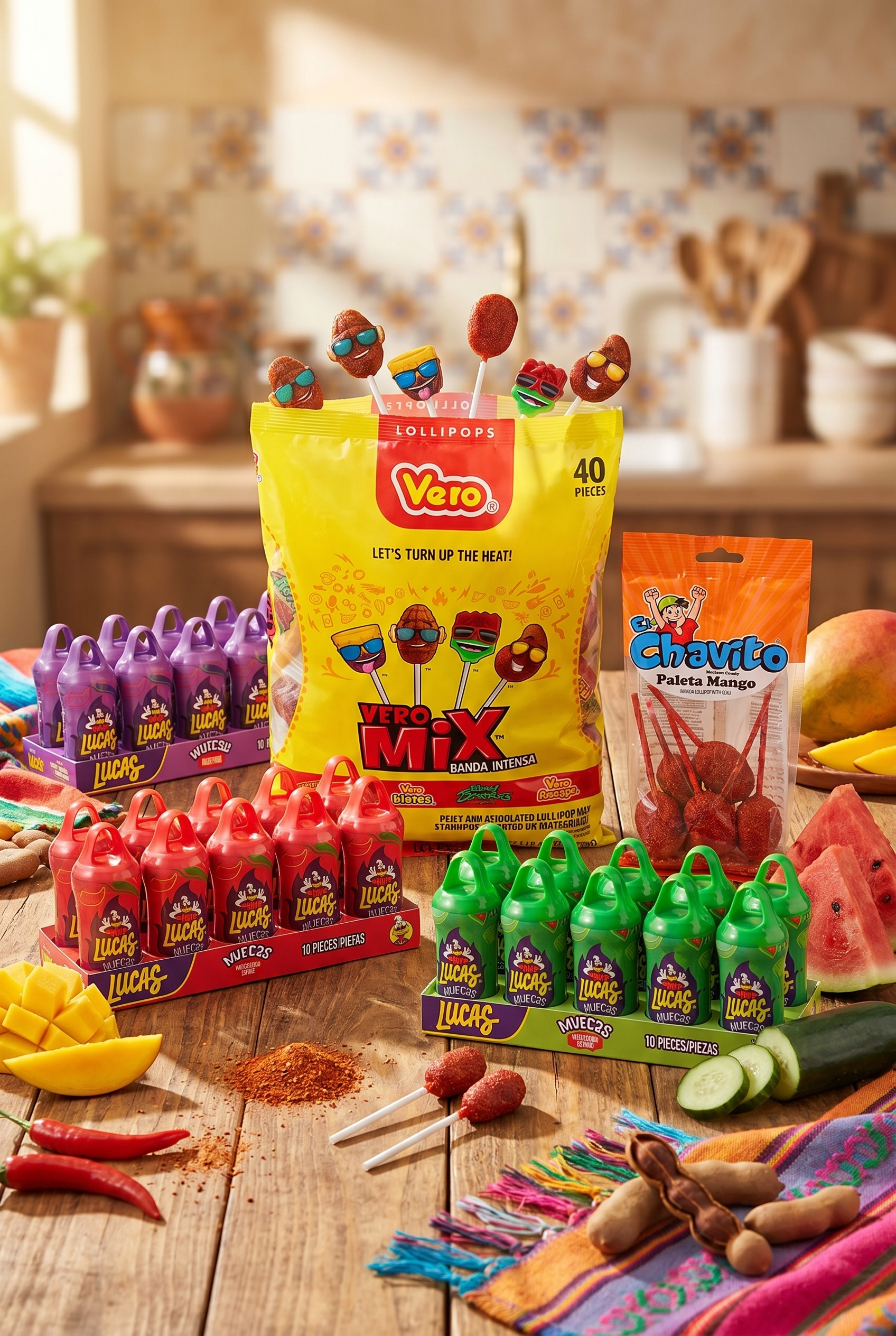
That is why people get locked in after their first real one. A bag like Vero Mix Banda Intensa Lollipops 40pcs does not feel like filler candy you only buy for kids. It feels like a category with an actual point of view. Same with Lucas Muecas Chamoy 10pcs, where the lollipop itself is only half the story because the chile powder changes every lick. That extra interaction is a huge part of why the format still works.
When people ask me why Mexican lollipops hit different, my honest answer is that they trust your taste buds more. They do not sand the edges off everything for mass appeal. They let cucumber taste like cucumber, tamarind taste dark and sticky, watermelon stay loud, and chile actually show up. That is a much better use of a stick than another generic cherry disc pretending it changed your life.
Chile powder is not a gimmick coating. It is the whole logic.
The easiest mistake beginners make is assuming the chile powder is there for shock value. It is not. In the best Mexican lollipops, the powder is doing the same job a good sauce does on food: it wakes everything up. Sweet fruit alone can get boring fast, especially on hard candy. Add chile, a little salt, and some tang, and suddenly the fruit has shape again.
That is why Lucas Muecas Sandia 10pcs works so well. Watermelon candy can go thin and fake in weaker brands, but the powder gives it structure. The sweetness gets checked, the sourness gets louder, and the whole thing stops tasting like random red sugar. Lucas Muecas Pepino 10pcs is even better proof. Cucumber sounds strange to people who only know mainstream candy, but the salty-spicy powder makes it make sense almost immediately.
Big candy companies love acting like innovation means a new color or some fake-limited-edition wrapper. Mexican lollipop brands figured out a long time ago that the real upgrade is contrast. When the powder, the fruit, and the hard candy base all pull in slightly different directions, the sucker stays interesting longer. That is not a gimmick. That is smart candy design.
Vero works because the brand understands party candy without making it boring
Vero is one of those names that shows up in candy tables, party bags, and corner-store runs for a reason. The brand understands that lollipops are supposed to be fun, but it does not confuse fun with blandness. Vero Mix Banda Intensa is the kind of bag I like because it gives you variety without turning into random chaos. You get the bright colors and the grab-bag feel, but the whole thing still stays rooted in the sweet-sour-spicy lane that makes Mexican candy worth buying in the first place.
That matters more than people think. A lot of mixed candy bags feel like someone dumped leftovers into plastic and called it a day. Vero feels intentional. It is good for sharing, but it also works when you are trying to explain the category to somebody who has only had American supermarket suckers. The bag looks approachable, then the flavor reminds you this is not built for a passive sugar autopilot.
If you want the shortest explanation of why Vero hits different, it is this: the brand respects intensity while still being easy to hand to a beginner. That is harder to do than it sounds. Plenty of spicy candy goes too hard too fast. Plenty of sweet candy plays it so safe it feels dead. Vero usually finds the middle where the candy still feels alive.
Lucas Muecas is where the format gets genuinely addictive
If Vero is the easy gateway, Lucas Muecas is where a lot of people suddenly understand the category on a deeper level. The reason is simple: the candy gives you something to do. With Lucas Muecas Chamoy, Sandia, or Pepino, you are not just waiting for flavor to happen. You are working the lollipop through powder, changing the ratio every few seconds, and controlling how wild you want the next hit to be.
That interactive part matters. It slows you down just enough to notice the flavor architecture instead of inhaling the candy and forgetting it. Sandia is the safest first buy because the fruit base is familiar and the powder reads bright instead of aggressive. Chamoy is for people who want more salt, more tang, and more of that unmistakable Mexican-candy punch. Pepino is the one I recommend when somebody says they are tired of predictable candy. It is green, savory-leaning, and weird in a way that actually pays off.
I also just respect how unapologetic the line is. Lucas never feels like it was watered down for people who might get scared by seasoning on candy. The whole point is that the powder changes the experience. Without that, it would just be another lollipop with a logo. With it, the format becomes something people actively crave.
Fruit choice changes everything: mango, watermelon, cucumber, and straight heat
One reason Mexican lollipops are easy to get obsessed with is that the fruit lane is way more interesting than the usual cherry-grape-orange loop. Mango is the cleanest example. It gives you sweetness, a little floral depth, and enough body to handle chile without collapsing. El Chavito Paleta Mango and Beny Que Mango Xtreme Lollipops 40pcs both prove why mango keeps surviving every trend cycle. It is candy-friendly, but it still has enough personality to stand up to seasoning.
Watermelon is the people-pleaser. El Chavito Paleta Sandia and Lucas Muecas Sandia hit that familiar juicy lane, but the chile and salt stop it from turning into kiddie candy. It stays fun without feeling dumbed down. Then you get to cucumber, which is where the category starts separating curious snackers from people who only want candy to taste like cartoons. Pepino works because cucumber is crisp, watery, and slightly vegetal, so the powder has something fresh to push against.
That range is the real flex. You can go beginner-friendly with sandia, fruit-forward with mango, or slightly more chaotic with pepino. Same general format, completely different mood. That is a lot more compelling than buying the same lollipop in three shades of fake red.
If I were building a first SRC order, this is exactly how I would do it
If you want to understand Mexican lollipops fast, do not overcomplicate it. I would start with Vero Mix Banda Intensa because a mixed bag gives you range and makes sharing easy. Then I would add Lucas Muecas Sandia as the safest introduction to the powder format. After that, pick one flavor that teaches you where your own lane is: Lucas Muecas Chamoy if you want more salt and punch, El Chavito Paleta Mango if you want straight fruit appeal, or Lucas Muecas Pepino if you want to see how weird candy can get without falling apart.
If you are buying for a party, I would lean heavier on Vero and Beny because the bags look good, travel well, and invite people in. If you are buying for yourself, Lucas is the better teacher because the powder makes you pay attention. That is really the split. Vero is the social entry point. Lucas is the rabbit hole.
Either way, this is one of those categories where the candy actually has a personality. I love that. Mexican lollipops do not try to be luxury, nostalgic, or fake-premium. They are just bold, specific, and honest about wanting flavor to matter. In a candy aisle full of safe copycat sugar, that still feels refreshing.
Featured Products


Related Reads
- Best Mexican Candy for Beginners: Your Guide to Authentic Flavors (No Regrets)
- Lucas Mexican Candy Guide: From Baby Lucas to Bomvaso - Every Flavor Ranked
- Why Mexican Candy Tastes Stronger Than American Candy
- Best Spicy Candy Ranked: 10 Heat-Packed Treats That Actually Deliver
Frequently Asked Questions
What makes Mexican lollipops different from regular lollipops?
The good ones are not only sweet. They stack fruit flavor with chile, salt, sourness, and powder, so the candy keeps changing while you eat it.
Are Vero lollipops actually spicy?
Some are spicy, some just lean sweet-fruity, and the best mixed bags give you both. The point is contrast, not pure heat for no reason.
Which Lucas Muecas flavor should beginners start with?
Start with sandia if you want the safest entry, then try chamoy if you want more salt and chile. Pepino is great once you know you like weird-in-a-good-way candy.
Do Mexican lollipops taste salty on purpose?
Yes, and that is part of why they work. Salt keeps the fruit from tasting flat and makes the chile and sour notes pop harder.
Are these good for party bags and candy tables?
Absolutely. They look bright, survive a table better than chocolate, and people always end up talking about the powder, the heat, and the weirdly addictive flavors.
What should I buy first from Snack Rack City?
I would start with one Vero mix bag, one Lucas Muecas flavor, and one straight fruit-forward paleta like mango or sandia so you can feel the whole category fast.
Save this guide for later