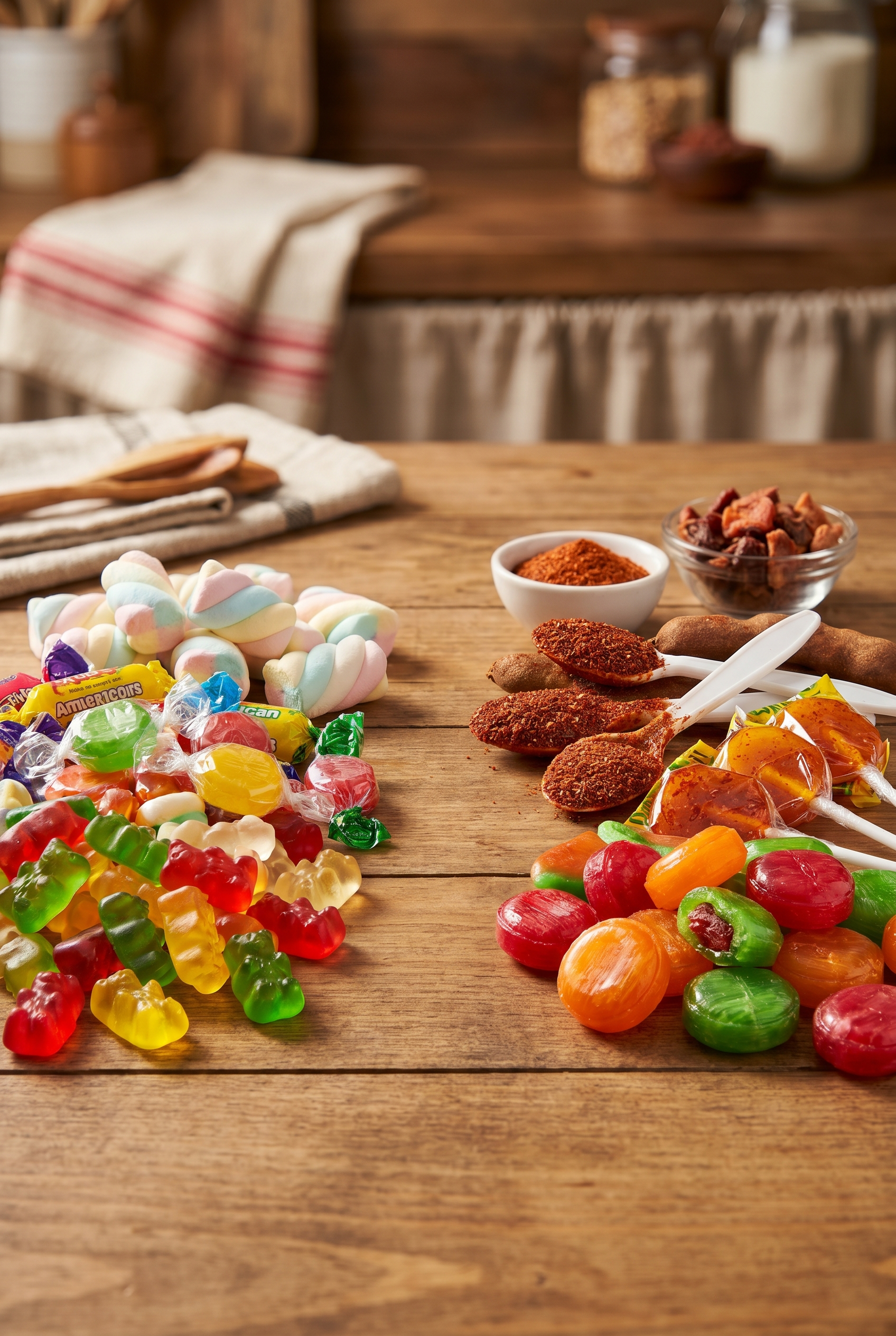
Why Mexican Candy Tastes Stronger Than American Candy
Quick answer: Mexican candy tastes stronger because it chases contrast, not safe sweetness. You get more acid, more salt, more chile, and way less corporate smoothing.
It is not your imagination: the flavor is built to hit harder
If you have ever tried a real Mexican candy next to a standard American candy, you probably noticed the same thing I did: one of them is trying to wake you up, and the other one is trying not to offend anybody. That is the cleanest explanation. Mexican candy usually tastes stronger because it is built around contrast. Sweet is only one piece of the deal. You also get acid, salt, chile, tamarind funk, roasted peanut depth, and textures that make the flavor hang around longer.
A lot of big American candy brands chase broad appeal, which usually means smoothing the edges off everything. More sugar, less bite, less risk. That is fine if you want something predictable, but it is also why so much of the aisle starts tasting interchangeable. Mexican candy is usually less interested in being safe. It wants a reaction. It wants that first second where you go, wait, what is happening here?
You can feel that difference immediately with Pulparindo Original or Baby Lucas Chamoy. These are not subtle candies pretending to be edgy. They are intense on purpose, and once you understand that, the whole category makes more sense.
Tamarind does what fake fruit flavor usually cannot
The biggest reason the flavor reads stronger is tamarind. It is naturally sweet, sour, dark, sticky, and a little earthy all at once, which means it brings more built-in complexity than the average neon fruit chew. American candy often leans on bright one-note fruit flavors that disappear fast. Tamarind does the opposite. It lingers, drags, and keeps unfolding after the first bite.
Pulparindo Original is one of the clearest examples. The bar is dense and tacky, so the tamarind does not just flash past your tongue and vanish. It stays there long enough for the salt and chile to catch up. Vero Rellerindos hits differently, but for the same reason. You get that chewy tamarind core and a more rounded fruit-candy shape, but the flavor still has real depth instead of tasting like generic syrup.
That is why people who say Mexican candy tastes stronger are usually reacting to tamarind first, even if they do not have the word for it yet. It has more personality than the candy most of us grew up on.
Salt and chile are not gimmicks here. They are the point
In a lot of American candy, sour or spicy coatings feel like a stunt. You get a blast up front, then it fades into regular sweetness. In Mexican candy, salt and chile usually stay integrated with the rest of the flavor. They are not there for a dare. They are there because the candy is supposed to taste alive.
Baby Lucas Chamoy is a perfect example of that philosophy. It is powder, so there is nowhere for the flavor to hide. You get sweet, tangy, salty, and chile-heavy notes immediately, and the mix feels deliberate rather than random. Lucas Gusano Tamarindo does the same thing in liquid form. It is sticky, punchy, and a little chaotic, but the stronger taste is not just heat. It is that salty-acidic backbone holding everything together.
That combination is part of why Mexican candy makes regular sweet-only candy feel flat after the fact. Once your palate gets used to contrast, plain sugar starts feeling lazy.
Texture matters more than people give it credit for
Flavor is not only about ingredients. It is also about how long the candy stays in contact with your mouth and how it releases what it is made of. Mexican candy often uses textures that force the flavor to linger. Dense bars, paste-style tamarind, sticky fillings, and powder dips all extend the experience instead of letting it disappear in ten seconds.
Pelon Pelo Rico is a weird little masterclass in this. The push-up format makes the tamarind paste feel playful, but the real reason it works is the texture. It is soft, sticky, and just resistant enough that the flavor hangs on. Lucas Gusano is even messier, which honestly helps. Liquid candy coats your tongue fast, so the sweet-sour-salty mix reads louder than a dry chew would.
American candy often prioritizes smoothness and convenience. Mexican candy is more willing to be a little unruly if the payoff is better flavor. I respect that.
Even the sweeter stuff usually has more character
People sometimes assume the stronger taste only comes from tamarind or chile, but even the sweeter Mexican candy usually has more character than its American equivalent. That is because the sweetness is often anchored by something roasted, nutty, creamy, or fruit-forward instead of just being a sugar delivery system.
De La Rosa Mazapán is the cleanest proof. It is not spicy. It is not sour. It still tastes stronger than a lot of peanut butter candy because the peanut flavor is roasted, direct, and not buried under chocolate or corn-syrup softness. The crumbly texture also makes it hit differently. You taste the peanut first, not a sugar shell pretending to be peanut-adjacent.
That is the part big candy companies miss when they flatten everything for mass appeal. Strong does not always mean extreme. Sometimes it just means the main flavor actually showed up to work.
If you want to understand the difference fast, buy for contrast
If I were trying to prove this point to somebody in five minutes, I would not hand them six versions of the same gummy. I would build a small progression. Start with De La Rosa Mazapán so you get the roasted peanut side. Move to Pelon Pelo Rico for sticky tamarind. Then go to Pulparindo Original for the full sweet-sour-salty-chile mix. Finish with Baby Lucas Chamoy or Lucas Gusano Tamarindo if you want the loud version.
That lineup makes the difference obvious fast. Mexican candy is usually stronger because it asks more from you and gives more back. More contrast. More personality. More texture. Less corporate sanding. It trusts you to handle a flavor that is allowed to be sharp, salty, sticky, weird, or all four at once.
That is why I keep coming back to it. Once you get used to candy that actually pushes, it is hard to get excited about the safe stuff again.
Featured Products


Related Reads
- Best Mexican Candy for Beginners: Your Guide to Authentic Flavors (No Regrets)
- Tamarind vs Chamoy: The Mexican Candy Flavor Debate, Finally Settled
- What Is Chamoy? The Flavor That's Taking Over Everything
- Lucas Mexican Candy Guide: From Baby Lucas to Bomvaso - Every Flavor Ranked
Frequently Asked Questions
Why does Mexican candy taste stronger than American candy?
Because a lot of Mexican candy stacks sour, salty, spicy, and sweet at the same time instead of flattening everything into plain sugar. Tamarind, chile, and chamoy do a lot of heavy lifting.
Is Mexican candy always spicy?
No. A lot of it uses chile, but not every product is hot. De La Rosa Mazapán is rich and peanuty, while tamarind candies can lean more tangy than spicy.
What ingredient makes the biggest difference?
Tamarind is the biggest separator for me. It brings natural acidity, fruit depth, and a darker sweetness that makes regular American fruit candy feel thin by comparison.
What is the best first product to try if I want to understand the flavor fast?
Start with Pulparindo Original. It gives you tamarind, salt, sugar, and chile in one bar, so the whole Mexican candy flavor logic clicks almost immediately.
Does stronger mean hotter?
Not always. Stronger can mean more acidic, more roasted, more salty, or just more layered. Mazapán is not hot, but it still tastes stronger than a lot of soft peanut candy.
Where should beginners shop if they want the real thing?
Shop stores that actually specialize in Mexican candy and carry the real brands, not watered-down copycat versions. Snack Rack City is good for that because the catalog is built around the real lane.
Save this guide for later