Build a Balanced Mexican Candy Cart in Four Flavor Lanes
Quick answer: A smart Mexican candy cart should not be five versions of the same loud flavor. I build it in lanes: one sweet anchor, one sour-fruit chew, one spicy tamarind hit, one weird format, and one soft reset.
Shop the guide
 Reading Build a Balanced Mexican Candy Cart in Four Flavor Lanes? Start with Ricolino Duvalin Tri Sabor 18pcs, then keep building from the same flavor lane.
Ricolino Duvalin Tri Sabor 18pcs
Shop sour candy
Reading Build a Balanced Mexican Candy Cart in Four Flavor Lanes? Start with Ricolino Duvalin Tri Sabor 18pcs, then keep building from the same flavor lane.
Ricolino Duvalin Tri Sabor 18pcs
Shop sour candy
Stop Building Random Mexican Candy Carts
The fastest way to waste money on Mexican candy is to treat the whole category like one giant dare. People see chile on five wrappers, throw everything in the cart, and then wonder why the order feels repetitive. That is not a spicy candy problem. That is a cart-building problem.
When I build a Snack Rack City cart, I do not ask, what looks loudest? I ask, what job is each product doing? A good cart needs contrast. It needs one sweet product that calms everything down, one sour-fruit product that wakes the mouth up, one spicy product with real backbone, one weird format that makes people curious, and one reset that keeps the whole order from becoming a chile endurance test.
The mistake I see most is buying by brand name only. Famous Mexican candy can still be the wrong fit if the rest of the cart already covers that same texture and flavor. If you have tamarind bars, tamarind gummies, tamarind rolls, and tamarind squeeze candy in one small order, you did not build range. You built a theme with no exit door.
That is the four-lane method. It is simple, but it saves the order from tasting like the same note in different wrappers. Generic candy blogs usually flatten Mexican candy into spicy versus not spicy. That is lazy. The better map is sweet, sour, spicy, weird, and reset. Once you shop that way, the cart starts feeling intentional instead of random.
Lane One: Start with a Sweet Anchor
I like starting with something sweet because it gives the cart a floor. Without that floor, every stronger product has to compete for attention, and the whole order gets tiring fast. The sweet anchor should not be boring, though. It should still feel specific to Mexican candy instead of acting like a generic chocolate bar wandered into the wrong aisle.
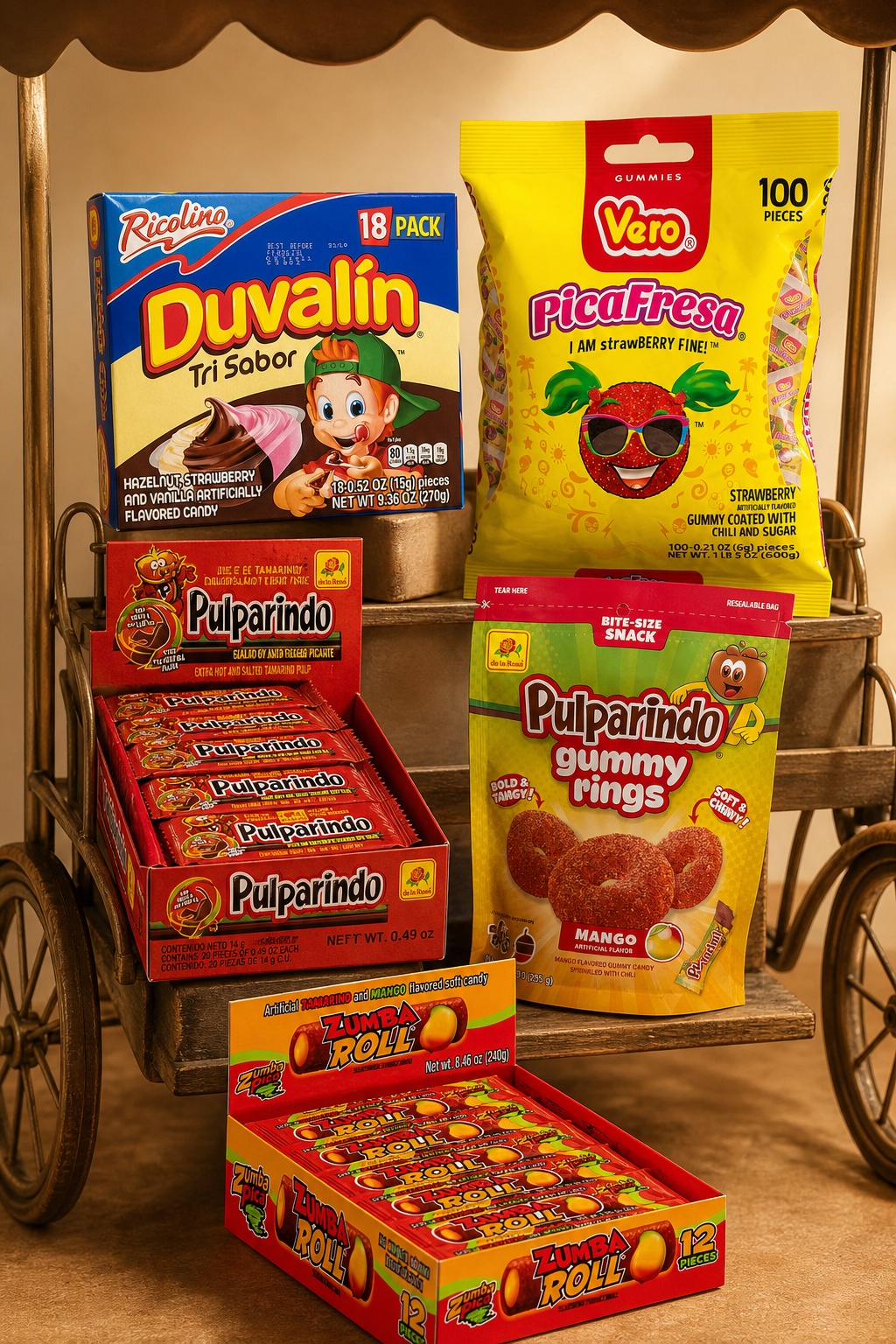
Ricolino Duvalin Tri Sabor 18pcs is my clean first pick for that job. The little tray, the spoon, and the strawberry-vanilla-hazelnut style cream all give the order a softer lane. It is sweet, easy to understand, and still different from the usual American candy default. It also works for the person at the table who does not want every snack to feel like a challenge.
Duvalin also tells you something useful about the shopper. If they love the creamy tray, they probably want more comfort textures before they want chile powder. If they think it is too gentle, you can push the next cart harder. That is better information than dumping a random spicy sampler in front of somebody and acting like their reaction proves anything.
This is why I would rather add Duvalin than another product with the same sour-red profile. A sweet anchor creates space. It makes the spicy and sour picks taste sharper because your mouth has somewhere else to go. That is balance, not filler.
Lane Two: Add Sour Fruit with Chew
The sour-fruit lane is where a Mexican candy cart starts feeling alive. I do not mean plain sour dust that burns off in three seconds. I mean fruit flavor with acid, salt, chile, or tamarind around it. The product needs enough chew to slow people down and enough fruit to keep the bite from becoming pure seasoning.
Vero PicaFresa Strawberry Gummy 100pcs is the shareable version of this lane. Strawberry keeps it familiar, while the coating gives it a sharper edge than a normal red gummy. It is not the softest candy in the cart, but it is not trying to be a full-on heat stunt either. That middle position is useful.
I also like PicaFresa because it is easy to test in a group. One person may read it as mostly strawberry. Another may notice the chile-sour coating first. That disagreement is useful. It means the product has enough range to create conversation without hijacking the entire order.
For a mango version, De La Rosa Pulparindo Gummy Rings Mango 9oz gives the cart a different chew and a more tropical sour lane. I like it when the order needs something bright but not basic. Mango, tang, and gummy texture do real work together, especially next to creamier sweets and stronger tamarind.
Lane Three: Pick One Spicy Product with Backbone
The spicy lane is where restraint matters. I love heat, but I do not need three products fighting for the same chile-tamarind spotlight. One serious spicy product is usually better than a pile of almost-identical heat. The point is to give the cart contrast, not turn every bite into a warning label.
Pulparindo Extra Spicy 20pcs is the pick when the cart needs real backbone. It is chewy, sour, salty, tamarind-heavy, and hotter than the gentle bridge candies. What makes it worth adding is that it does not just scream heat and disappear. The tamarind gives it a darker pull, the salt keeps it mouthwatering, and the chile hangs around long enough to matter.
This is also the lane where I refuse to overbuy. If Pulparindo Extra Spicy is in the cart, I do not need every other product trying to out-spice it. Let one product be the high point. The rest of the order should make that high point easier to enjoy, not bury it under more of the same.
I would not make Pulparindo Extra Spicy the only personality in the order. That is how carts get lopsided. But as the one serious lane, it earns its spot. It tells the spicy-candy person at the table that the order is not playing around while still leaving room for softer, fruitier, and weirder products.
Lane Four: Add One Weird Format on Purpose
Every SRC cart needs one product that makes people pause and ask what it is. That is not because novelty automatically equals good candy. Plenty of novelty candy is garbage with a gimmick taped to it. The weird product has to earn the attention with flavor after the format gets the first look.
Zumba Pica Zumba Roll Tamarind & Mango 12pcs is the kind of weird I actually trust. The roll format makes the candy feel different before you even taste it, but it still sits in a real flavor lane: tamarind, mango, chile, fruit, and chew. It stretches the cart without copying Pulparindo bar-for-bar or turning mango into another basic gummy.
The weird lane is also how you find out whether someone likes interaction or just flavor. Some shoppers want to unwrap, pull, roll, dip, and make the candy a little event. Others would rather grab a gummy and move on. Neither answer is wrong, but the product teaches you fast.
This lane is important because it gives the order a story. People remember the thing they had to unroll, peel, squeeze, dip, or figure out. Just do not confuse memorable with useful. If the product looks wild but tastes empty, leave it alone. Zumba Roll works because the format and flavor both show up.
Quick cart path
Use these article picks as the buying shortcut instead of searching the whole store.
Ricolino Duvalin Tri Sabor 18pcs Vero PicaFresa Strawberry Gummy 100pcs
 De La Rosa Pulparindo Gummy Rings Mango 9oz
Do Not Forget the Reset
The reset is the product most people forget, and it is usually the reason a cart feels more thoughtful than chaotic. After chile, sour fruit, tamarind, and chewy formats, I want something lighter that lets the mouth calm down. This is not a throwaway add-on. It is the product that keeps people reaching back into the order instead of tapping out.
Aldama Obleas con Cajeta 20pcs does that job beautifully. The wafer is light, the cajeta brings a milk-caramel style sweetness, and the whole bite feels quieter without being bland. It is one of my favorite reminders that Mexican candy is not only about chile dust and tamarind intensity.
It also changes the pace of the table. After a louder candy, a wafer makes people reset their expectations instead of chasing the same burn over and over. That is exactly why I keep it in the plan.
A reset also makes the cart better for mixed groups. Somebody who loves Pulparindo may still want a softer finish. Somebody nervous about spicy candy can start with Obleas and Duvalin, then work toward PicaFresa or mango rings. That range makes the order more usable.
My Actual Balanced SRC Cart
If I were building this cart today, I would keep it tight: Duvalin Tri Sabor for the sweet anchor, Vero PicaFresa for shareable sour fruit, Pulparindo Gummy Rings Mango for mango chew, Pulparindo Extra Spicy for the serious lane, Zumba Pica Zumba Roll for the weird format, and Aldama Obleas con Cajeta for the reset.
That gives the cart cream, wafer, cajeta, strawberry gummy, mango chew, tamarind, chile, and one format that feels different from everything else. More importantly, it avoids the mistake of buying six products that all hit the same sour-spicy note. A cart can be bold without being repetitive.
If you already know your group hates heat, swap Pulparindo Extra Spicy for a second sweet product. If your group loves heat, keep the sweet anchor anyway. That is the part people miss. Balance is not weakness. Balance is how the stronger picks get more interesting.
The best Mexican candy cart is not the one with the loudest wrappers. It is the one where every product earns a lane. Build that way once and you will stop treating the category like a guessing game.
Turn this read into a cart

Start with 6 linked picks from this guide, then add one safe pick and one discovery pick so the order has range.
Shop sour candyFeatured Products


Related Reads
- How to Decode Mexican Candy Flavors Before You Buy
- Mexican Candy for Non-Spicy People: SRC Picks That Work
- Powder Candy vs Gummies: What to Buy First from SRC
- Build a Chamoy Cart Without Buying the Same Thing at SRC
Frequently Asked Questions
What is a balanced Mexican candy cart?
A balanced Mexican candy cart has different flavor lanes instead of repeating one idea. I like one sweet anchor, one sour-fruit chew, one spicy tamarind product, one weird format, and one softer reset.
Should beginners start with spicy Mexican candy?
Not always. If someone already likes chile, chamoy, Tajin-style fruit, or tamarind, spicy can work. If not, start with Duvalin, Obleas, or a mild gummy before adding a stronger product.
How many products should I put in a first Mexican candy order?
Five or six is enough. That gives you range without turning the cart into random clutter. More products only help if each one brings a different texture or flavor job.
What is the weird lane in a Mexican candy cart?
The weird lane is the product that creates curiosity before the first bite. It might be a roll, powder, squeeze candy, rope, or unusual gummy format. It should still taste good, not just look strange.
Can I build a Mexican candy cart without chamoy?
Yes. Chamoy is useful, but it is not required. You can build a strong cart with creamy sweets, strawberry chile gummies, mango tamarind rings, spicy Pulparindo, and wafer-cajeta candy.
Why not just buy the most popular Mexican candy?
Popularity does not guarantee balance. A cart with five famous spicy products can still taste repetitive. I would rather buy fewer products that each do a clear job.
Save this guide for later