How to Decode Mexican Candy Flavors Before You Buy
Quick answer: Mexican candy gets easier to shop when you read the flavor lane before the wrapper. Mango, chamoy, tamarind, sandia, and chile-limon products all tell you what kind of bite you are buying.
Shop the guide
 Reading How to Decode Mexican Candy Flavors Before You Buy? Start with Baby Lucas Mango 3pcs, then keep building from the same flavor lane.
Baby Lucas Mango 3pcs
Shop sour candy
Reading How to Decode Mexican Candy Flavors Before You Buy? Start with Baby Lucas Mango 3pcs, then keep building from the same flavor lane.
Baby Lucas Mango 3pcs
Shop sour candy
Stop Reading Mexican Candy Like It Is Just Hot or Not
The fastest way to buy the wrong Mexican candy is to look at the wrapper, see chile, and decide the only question is whether you can handle spicy candy. That is too flat. Mexican candy flavors are more like lanes: mango, chamoy, tamarind, sandia, chile-limon, creamy, salty, chewy, powdery. Heat matters, but it is not the whole personality of the candy.
When I build a Snack Rack City cart, I read the flavor cue before I read the dare. A mango product is usually bright and round before it gets spicy. A tamarind product usually has a darker sour pull. Chamoy is more slippery: fruity, salty, tangy, and sometimes hot, depending on the format. Sandia is usually the friendly watermelon lane. Elote or chile-limon cues tell me the candy is borrowing from snack seasoning, not just dessert.
This is also why I do not trust lazy heat scales by themselves. Mild, medium, and hot can help, but they do not tell you whether the candy is juicy, sticky, salty, powdery, creamy, or snacky. Two candies can have the same chile level and still eat completely differently. That is the detail generic candy blogs usually skip because they are writing from labels, not from a real cart.
That little map saves money. It keeps you from buying five products that all hit the same sour-red note. It also helps beginners start with confidence instead of grabbing whatever looks loudest. Loud wrappers are not a strategy. Flavor lanes are.
Mango Means Bright Fruit, Then the Edge
Mango is the easiest Mexican candy flavor to misunderstand because people expect it to behave like plain tropical candy. Good mango candy should taste like fruit first, then bring the sour, salt, chile, or tamarind around the edges. If the fruit disappears and all you get is powder burn, I am not impressed. Mango needs enough sweetness to carry the sharper parts.
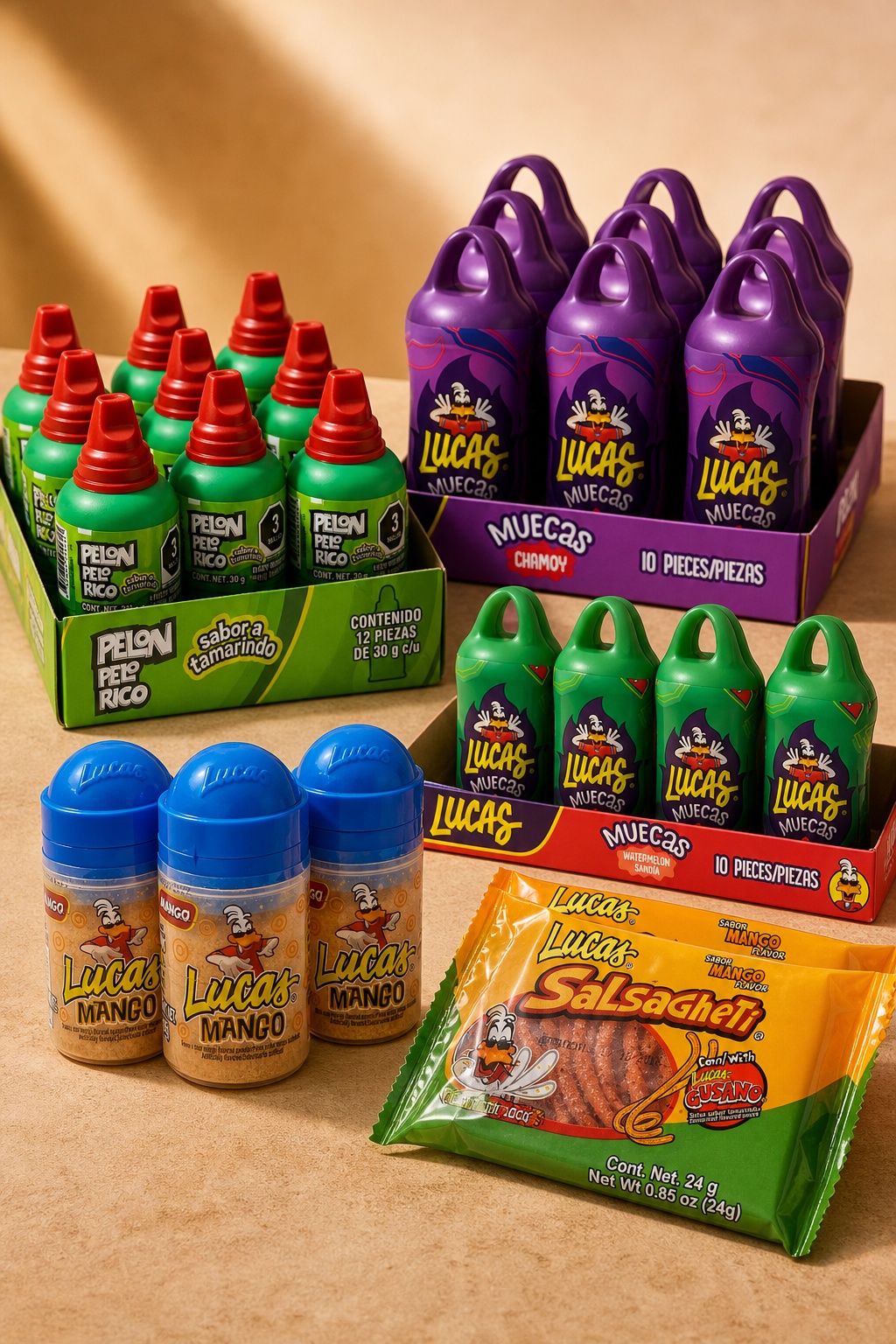
For a beginner, Baby Lucas Mango 3pcs is useful because it teaches the mango-powder lane quickly. It is direct, portable, and honest about what it is. You get mango candy with seasoning energy, not a soft gummy pretending nothing is happening. If you already like mango with lime or Tajin-style seasoning, this lane will probably make sense fast.
The shopping cue I use is simple: mango products are best when the fruit still has room to breathe. If the label says mango and the whole thing tastes like anonymous red dust, I do not care how famous the brand is. The mango should be doing work. It should make the chile feel brighter, not hide behind it.
The more playful mango step is Lucas Skwinkles Salsaghetti Mango 12pcs. Same broad fruit family, totally different eating rhythm. The strips make mango feel chewy and weird in a good way. That is why I like having one mango powder product and one mango texture product in the same mental map, even if I would not always buy both in one cart.
Chamoy Is Not Just Spicy Syrup
Chamoy gets treated like a single flavor, but it is really a balance. I expect fruitiness, tang, salt, chile, and a little sticky depth. Some chamoy candies lean sweeter. Some lean sharper. Some use powder. Some use sauce. If you only ask whether chamoy is spicy, you miss the point. The better question is whether you want chamoy as a controlled lick, a powder hit, a gummy coating, or a messy sauce moment.
Lucas Muecas Chamoy 10pcs is one of my favorite teaching products because the lollipop controls the pace. You are not dumping a whole pile of seasoning into your mouth. You lick, dip, taste, and reset. That makes the chamoy lane easier to read, especially for somebody who has only had American sour candy.
Chamoy is also a good test of whether somebody wants complexity or just sweetness. If the salty tang annoys them, they probably need a fruitier on-ramp like sandia. If they keep dipping back in, they are ready for stronger tamarind, chile-limon, or powder candy. One product can tell you a lot when you pay attention to the reaction.
I would buy chamoy when I want a candy that moves around in the bite. Plain sweet candy gives you one direction. Chamoy gives you a loop: sweet, sour, salty, chile, back to fruit. That loop is why people keep going back even when the flavor feels bold at first.
Tamarind Is the Darker Sour Lane
Tamarind is where a lot of first-time shoppers either fall in love or panic. It is not sour like a blue raspberry belt. It is deeper, darker, and a little earthy. Sometimes it tastes sticky and fruity. Sometimes it tastes salty and almost savory. That range is why tamarind is more useful than another generic sour label.
If you want the classic squeeze-candy lesson, Pelon Pelo Rico Tamarind 12pcs is the kind of product that explains it fast. The texture is part of the experience. You push the tamarind candy through the top, it comes out in little strands, and suddenly the format is doing as much work as the flavor. That is not corporate candy polish. That is candy with a point of view.
Tamarind is not where I start every beginner, but I do think every serious SRC cart should try it eventually. If mango is the bright front door, tamarind is the back room with stronger opinions. Buy it when you want sour candy that feels more grown up than just citric acid and sugar.
Sandia Is the Friendly Fruit Bridge
Sandia, or watermelon, is the fruit lane I trust when somebody wants Mexican candy but looks nervous about the darker stuff. Watermelon is familiar. It reads juicy, bright, and candy-friendly before the chile or salt shows up. That does not mean it is boring. It means the fruit cue gives people a place to stand while the seasoning does its work.
Lucas Muecas Sandia 10pcs is a smart bridge because it uses a lollipop format and a flavor most people already understand. The candy does not ask you to decode tamarind texture, chamoy sauce, and chile powder all at once. It gives you watermelon first, then lets the Lucas-style seasoning come in around it.
This is the lane I would use for cautious snackers, mixed groups, and anyone who says they want something different but not punishing. Sandia is also helpful in a bigger cart because it gives contrast. After tamarind, chamoy, and chile-limon, a watermelon piece can make the whole order feel less heavy.
Quick cart path
Use these article picks as the buying shortcut instead of searching the whole store.
Baby Lucas Mango 3pcs Lucas Skwinkles Salsaghetti Mango 12pcs
 Lucas Muecas Chamoy 10pcs
Elote and Chile-Limon Point Toward Snack Logic
Elote is not just corn as a flavor word. In candy and snack shopping, it points toward street-snack logic: chile, lime, salt, tang, and savory sweetness. That matters because some SRC shoppers are not really looking for dessert. They want the mouthwatering thing that feels closer to a seasoned snack than a sugar bomb. That is a real lane, and it deserves its own spot in the cart.
Since SRC's live product path is stronger on chile-limon snack cues than literal elote candy right now, I would use King Henry's Botanas Con Chile y Limon to test that savory side. It gives you the chile-lime-salt feeling without pretending to be another fruit candy. That kind of product can keep a cart from tasting like nothing but sweet red powder.
I like having one snack-style product near the candy because it resets your mouth. It also tells you something about your taste. If you love the chile-limon botanas, you probably want more salty, tangy, savory picks. If you ignore them and go back to mango gummies, that is useful information too.
Build the Cart by Lane, Not by Wrapper Noise
Here is the cleaner SRC cart formula: one bright fruit, one chamoy product, one tamarind product, one friendly bridge, one chile-limon snack, and one texture pick if you want the order to feel more fun. That could mean Baby Lucas Mango, Lucas Muecas Chamoy, Pelon Pelo Rico, Lucas Muecas Sandia, King Henry's Botanas, and Salsaghetti Mango. You do not have to buy all six every time, but the structure helps you see what each product is doing.
The point is not to make candy shopping feel like homework. The point is to stop wasting cart space on duplicate flavor jobs. If every product is mango-chile, the order gets boring even if the wrappers look different. If every product is tamarind, beginners get overwhelmed. If every product is mild fruit, the cart never gets interesting. Flavor lanes keep the order balanced without making it bland.
This is how I would talk somebody through the shelf in real life. Pick the fruit you already trust, then add one flavor you are curious about and one format you have not tried. That is enough discovery for one order. You can always get stranger next time, and the second order will be smarter because the first one actually taught you something.
My honest rule is simple: if you cannot say what job a candy has, pause before adding it. Mango should brighten. Chamoy should loop. Tamarind should deepen. Sandia should bridge. Chile-limon should reset. Texture should make the bite more fun. Once you shop that way, Mexican candy stops looking random and starts looking like a map you can actually use.
Turn this read into a cart

Start with 6 linked picks from this guide, then add one safe pick and one discovery pick so the order has range.
Shop sour candyFeatured Products


Related Reads
- Tamarind vs Chamoy: The Mexican Candy Flavor Debate, Finally Settled
- Why Salt Makes Mexican Candy Hit Harder Than Sweet
- Mexican Candy for Non-Spicy People: SRC Picks That Work
- Powder Candy vs Gummies: What to Buy First from SRC
Frequently Asked Questions
What are the main Mexican candy flavors to learn first?
Start with mango, chamoy, tamarind, sandia, and chile-limon. Those five lanes explain most SRC flavor decisions better than generic labels like sweet, sour, or spicy.
Is chamoy the same thing as tamarind?
No. Chamoy usually reads fruity, salty, tangy, and chile-spiked. Tamarind is darker, tangier, and more sticky-sour. Some candies mix both, but they are not the same lane.
Which Mexican candy flavor is easiest for beginners?
Mango and sandia are usually easiest because the fruit cue is familiar. I would start with Baby Lucas Mango or Lucas Muecas Sandia before jumping into heavier tamarind.
What does elote flavor mean in candy shopping?
Elote points toward savory chile-lime, salt, and snack-style flavor instead of straight dessert sweetness. SRC's chile-limon botanas are the easier way to test that lane.
How do I avoid buying five candies that taste the same?
Pick one fruit-forward product, one chamoy product, one tamarind product, one salty chile-limon snack, and one texture product. That keeps the cart from collapsing into one flavor.
Are stronger Mexican candy flavors always hotter?
No. Strong can mean sour, salty, fruity, roasted, sticky, or chewy. Heat is only one part of the map, and a smart cart uses more than just chile level.
Save this guide for later