Build a Chamoy Cart Without Buying the Same Thing at SRC
Quick answer: A good chamoy cart should not be six red packages doing the same job. I build it around format first: one dip, one powder, one squeeze candy, one mango bridge, one tamarind anchor, and one weird texture pick.
Shop the guide
 Reading Build a Chamoy Cart Without Buying the Same Thing at SRC? Start with Lucas Muecas Chamoy 10pcs, then keep building from the same flavor lane.
Lucas Muecas Chamoy 10pcs
Shop sour candy
Reading Build a Chamoy Cart Without Buying the Same Thing at SRC? Start with Lucas Muecas Chamoy 10pcs, then keep building from the same flavor lane.
Lucas Muecas Chamoy 10pcs
Shop sour candy
A Good Chamoy Cart Needs Jobs, Not Duplicates
The easiest way to ruin a chamoy candy cart is to buy every red package that looks loud and hope variety happens by accident. It usually does not. You end up with five products fighting for the same sour-salty-chile corner, then the order feels smaller than it should. Chamoy is too useful for that. It can be a dip, a powder, a squeeze, a mango accent, a tamarind partner, or the thing that makes a lollipop more fun than it has any right to be.
When I build this kind of Snack Rack City order, I start with format before heat. I want one product that gives control, one that gives powder chaos, one that gives squeeze-candy tang, one that brings fruit, one that anchors the cart with tamarind, and one that feels playful enough to justify being in the box. That sounds more complicated than it is. It just means every product has to earn its space.
The other reason I shop this way is price discipline. If two products give the same exact bite, one of them is probably just making the cart heavier, not better. I would rather spend that slot on a different texture or a different fruit angle. A good chamoy order should feel like a tasting flight, not a dare bag.
This is the difference between a chamoy cart and a pile of chamoy-themed wrappers. The cart should teach you something. It should show why chamoy works across lollipops, powders, squeeze candy, mango strips, and tamarind chews without making every bite taste like a copy of the last one.
Start With the Chamoy Dip You Can Control
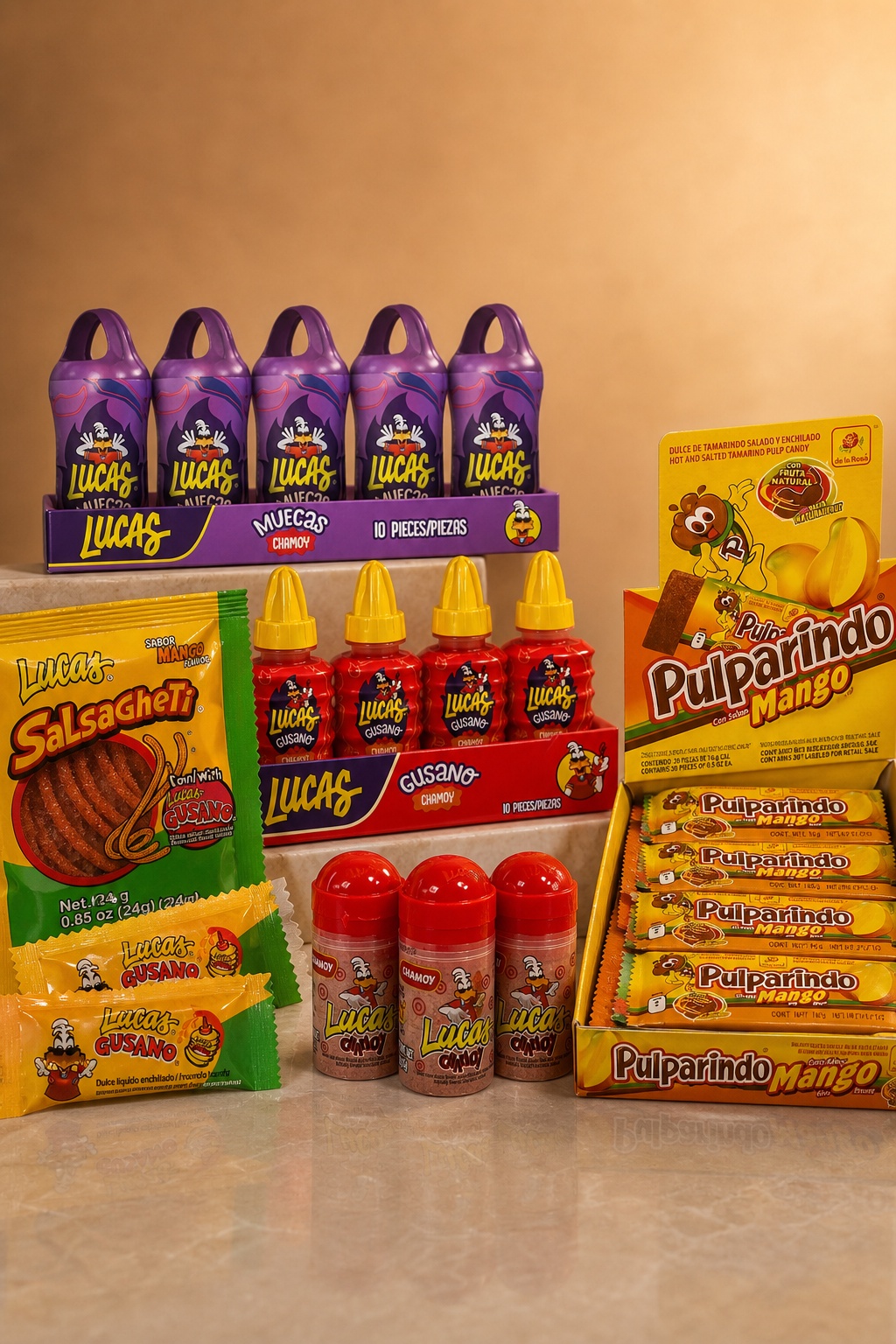
The first product I would add is Lucas Muecas Chamoy 10pcs. It is the cleanest teaching product because the format gives you control. You get the lollipop, the chamoy powder, and the little routine of licking, dipping, and deciding how aggressive the next bite should be. That makes it better for beginners than something that dumps all the flavor at once.
Control matters because chamoy is not just spicy. It is fruity, salty, tangy, and chile-spiked, and the best part is the way those pieces rotate. If you go too hard too fast, you only taste the salt and acid. Muecas lets you slow down enough to notice the loop. The candy is sweet, then the dip turns it sharper, then the salt pulls you back in.
I also like that Muecas does not make the cart feel locked into one eating speed. You can set it down, come back, dip again, and keep adjusting. That makes it more useful than a one-bite novelty. It gives the chamoy flavor room to act like a feature instead of a stunt.
This is also the pick I trust for mixed groups. Somebody can keep it gentle. Somebody else can bury the lollipop in powder and make it dramatic. Same product, different intensity. That is useful cart design, not filler.
Use Baby Lucas for the Powder Slot
After the controlled dip, I want a straight powder product, and Baby Lucas Chamoy 3pcs is the obvious slot. I do not buy it because it is gentle. I buy it because it is direct. Powder candy has a specific attitude: fast, salty, sharp, and snacky. If you like that little hit of seasoning energy, Baby Lucas gets there quickly.
The warning is simple. Do not build the whole order around powder unless you already know you love powder. Too much of it can flatten a cart because every bite starts feeling dusty and loud. One powder product is smart. Three powder products are usually somebody shopping with their eyes instead of their mouth.
Powder is also where people learn whether they want chamoy as a flavor or chamoy as a snack seasoning. Those are close, but they are not identical. Baby Lucas leans into the seasoning side, which makes it useful next to sweeter or chewier products that need a sharper reset.
Baby Lucas works best as the accent. It gives the chamoy cart a quick punch between slower products like lollipops, squeeze candy, and bars. That pacing matters. A good cart has fast bites and slower bites. If everything eats the same way, the flavor starts feeling repetitive even when the labels are different.
Add Lucas Gusano for the Squeeze Candy Lane
The squeeze slot is where Lucas Gusano Chamoy 10pcs earns its place. This is not the same job as Muecas, even though both sit in the Lucas chamoy world. Gusano is more sauce-like, more direct, and more about that squeeze-candy rhythm. You control it, but in a different way. It is less lick-and-dip and more squeeze, taste, reset.
That difference is exactly why I would include it. Chamoy is not one format. Gusano makes the flavor feel smoother and more concentrated, while Muecas makes it feel interactive and powder-driven. If you are trying to understand which style you actually like, those two products give you a real comparison without forcing the cart into a boring duplicate lane.
This is also the product that makes the order feel less polished in a good way. Some candy is supposed to be a little strange. Gusano brings that oddball energy without becoming a fake novelty, because the flavor still has a real reason to be there.
I also like Gusano when the cart is for people who want bold flavor but do not want a full candy bar or a huge share bag. It is small, weird, and useful. That is a good combination when you are building a box that should feel discovered, not assembled by a corporate assortment committee.
Mango Keeps Chamoy From Getting One-Note
A chamoy cart without fruit can get heavy fast. That is why I like adding Lucas Skwinkles Salsaghetti Mango 12pcs. Mango gives the whole order a brighter lane, and the strip format makes the product feel like an event instead of another quick sour-spicy hit. It is chewy, playful, a little messy, and exactly the kind of thing that keeps the cart from feeling too serious.
Then I would use Pulparindo Mango 20pcs as the cleaner mango-tamarind bridge. It still belongs near the chamoy conversation because mango, chile, salt, and tamarind all live close together in this category, but it does a different job than Skwinkles. Pulparindo Mango is more compact and bar-like. Skwinkles is more interactive and weird.
Mango is the pressure valve. It keeps the cart bold without letting it become all acid and salt. If somebody opens the order and wants a sweeter first move, mango gives them that entry point while still staying in the Mexican candy lane.
That is the whole reason to add both kinds of mango logic. One gives the cart movement. One gives it structure. If your order already has powder, dip, and squeeze candy, mango keeps everything from turning into one sharp red note.
Quick cart path
Use these article picks as the buying shortcut instead of searching the whole store.
Lucas Muecas Chamoy 10pcs Baby Lucas Chamoy 3pcs
 Lucas Gusano Chamoy 10pcs
Tamarind Makes the Cart Taste Deeper
Chamoy and tamarind are not the same thing, and I do not want a cart that pretends they are. Chamoy usually reads fruitier and more salty-tangy. Tamarind is darker, stickier, and more sour in a deeper way. That is why Pelon Pelo Rico Tamarind 12pcs belongs in this order even though it is not labeled as a pure chamoy product.
Pelon gives the cart a different kind of tang. The push-up format changes the experience before you even talk about flavor. It is playful, but the tamarind itself has enough depth to keep it from feeling like a novelty. That matters because chamoy can be bright and salty, and sometimes you need a darker product next to it so the whole order has contrast.
I would not replace every chamoy product with tamarind, but I would never build a serious chamoy-adjacent cart without at least one tamarind anchor. It gives your mouth another reference point. After Pelon, the chamoy products taste fruitier. After Muecas or Gusano, Pelon tastes deeper. That back-and-forth is the point.
The Six-Product SRC Chamoy Cart I Would Actually Buy
My final SRC chamoy candy cart would be Lucas Muecas Chamoy for the controlled dip, Baby Lucas Chamoy for the powder slot, Lucas Gusano Chamoy for squeeze candy, Skwinkles Mango for the playful strip format, Pulparindo Mango for a cleaner fruit-tamarind bridge, and Pelon Pelo Rico for the darker tamarind anchor.
That gives you six different jobs: dip, powder, squeeze, strips, bar, and push-up candy. It also gives you chamoy, mango, chile, salt, sourness, and tamarind without making every product wear the same personality. This is what I mean by building an order instead of collecting wrappers.
If you want the safer three-product version, start with Muecas Chamoy, Skwinkles Mango, and Pelon Pelo Rico. If you want the bolder version, add Baby Lucas and Gusano. If you want the order to feel more rounded, add Pulparindo Mango before you add another powder. That decision path keeps the cart useful.
My honest rule is this: do not buy duplicate chamoy unless the format changes the bite. A lollipop with dip, a powder bottle, and a squeeze candy can all belong in one cart because they teach different things. Three products that only repeat the same sour-salty hit do not. Chamoy deserves better than a lazy pile.
Turn this read into a cart

Start with 6 linked picks from this guide, then add one safe pick and one discovery pick so the order has range.
Shop sour candyFeatured Products


Related Reads
- Tamarind vs Chamoy: The Mexican Candy Flavor Debate, Finally Settled
- How to Decode Mexican Candy Flavors Before You Buy
- Mexican Candy for Non-Spicy People: SRC Picks That Work
- Like Takis? Try These Mexican Candy Picks First from SRC
Frequently Asked Questions
What belongs in a chamoy candy cart?
A smart chamoy cart needs different jobs: one dip, one powder, one squeeze candy, one mango bridge, one tamarind anchor, and one playful texture product.
Should I buy several chamoy products at once?
Yes, but only if the formats are different. Lucas Muecas, Baby Lucas, and Lucas Gusano all teach different parts of chamoy instead of repeating the same bite.
What is the safest chamoy pick for beginners?
Lucas Muecas Chamoy is the easiest first pick because the lollipop and powder let you control how much chamoy flavor you want in each bite.
What should I add if my chamoy cart feels too sour?
Add Pulparindo Mango or Skwinkles Mango. Mango gives the cart fruit and sweetness so the chamoy and tamarind products do not all hit the same sharp note.
Is chamoy the same as tamarind candy?
No. Chamoy is usually fruity, salty, tangy, and chile-spiked. Tamarind is darker, stickier, and more sour. A good cart can use both.
How many products should I start with?
Five or six is enough. Fewer can feel thin, and more can get repetitive unless every product has a clear format or flavor role.
Save this guide for later