Game Night Candy That Won't Wreck Cards or Controllers
Quick answer: Game night candy has to do more than taste good. I want pieces that are easy to pass, easy to pause, and less likely to leave red dust or sticky fingerprints all over the table.
Start With the Table, Not the Candy
Game night candy sounds easy until somebody picks up a controller with chile dust on their thumb. Then the snack table stops being fun and starts becoming evidence. I love loud candy, but I do not love fingerprints on cards, gummy residue on dice, or a sticky button that everybody pretends not to notice.
So I build game night snacks backward. I look at the table first. Are people shuffling cards? Passing tiles? Grabbing a controller between turns? Writing scores? If hands matter, the candy has to respect that. Flavor still matters, obviously, but format matters just as much. A brilliant candy that forces everyone to wipe their hands every thirty seconds is not brilliant for this setting.
I also think about pace. A four-hour board game does not need candy that disappears in ten minutes, and a loud party game does not need candy that requires a fork, a bowl, or constant hand washing. The right snack lets people stay in the rhythm of the night.
The sweet spot is candy that gives real flavor without turning the table into a cleanup project. Wrapped pieces, lollipops, firmer gummies, and portioned bars all have a place. I am not trying to make the night boring. I am trying to keep the snacks from interfering with the actual reason people came over.
Shop the guide
 Reading Game Night Candy That Won't Wreck Cards or Controllers? Start with Vero Rellerindos Tamarind 65pcs, then keep building from the same flavor lane.
Vero Rellerindos Tamarind 65pcs
Shop sour candy
Reading Game Night Candy That Won't Wreck Cards or Controllers? Start with Vero Rellerindos Tamarind 65pcs, then keep building from the same flavor lane.
Vero Rellerindos Tamarind 65pcs
Shop sour candy
The Easy Pass-Around Pick
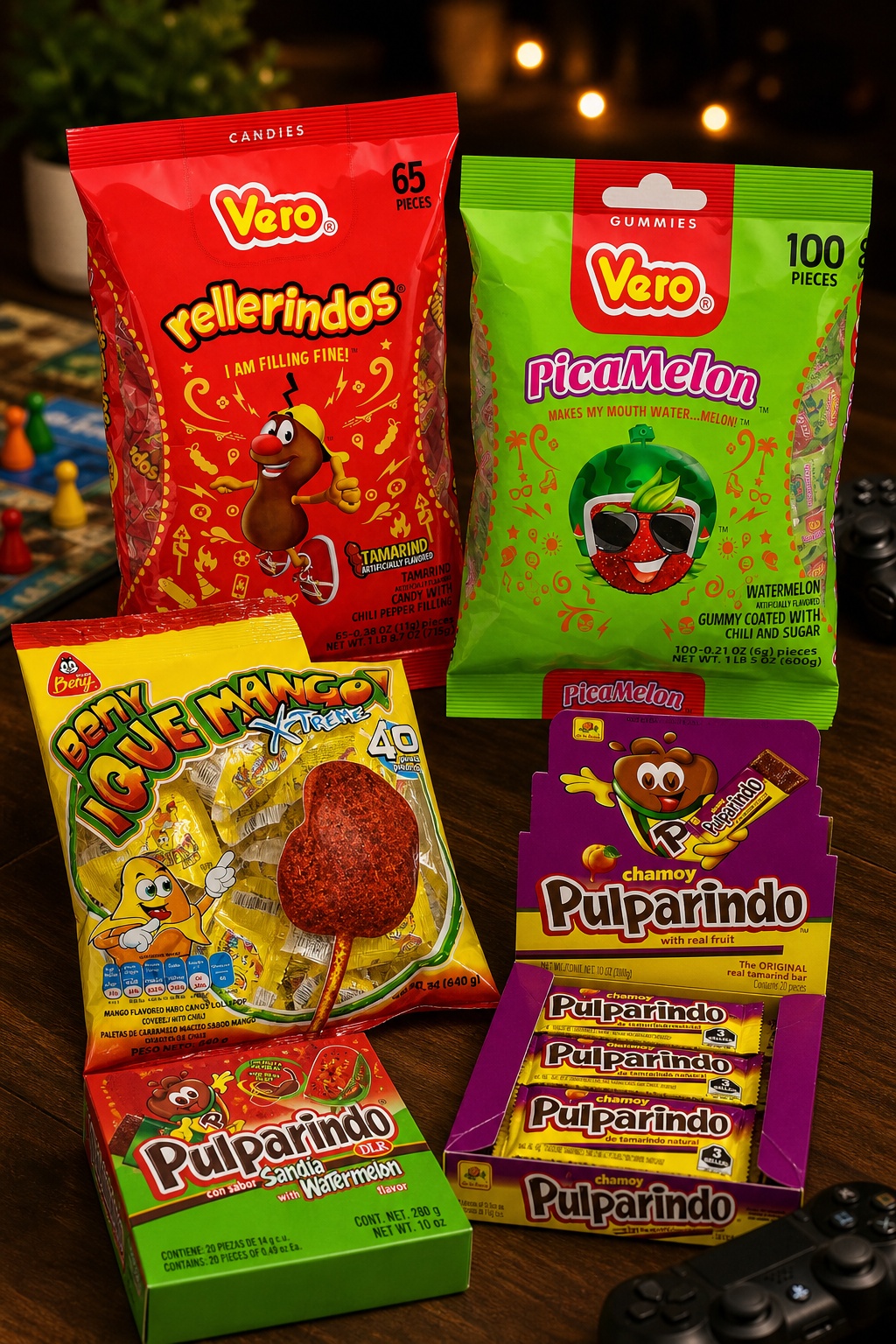
If I want one candy that can sit near the center of the table, I start with Vero Rellerindos Tamarind 65pcs. It has the kind of format that makes sense when people are talking, waiting for a turn, or deciding whether to betray their friend in a strategy game. You can take one, move on, and not make the snack the whole event.
Rellerindos gives tamarind, chile, and a hard-candy pace, which is useful because it slows people down. Fast candy disappears before the first round is over. Slower candy stretches the snack table without needing a lecture about portion control. That matters when the night runs long and everyone keeps wandering back for one more piece between turns.
I also like it because it does not ask new people to commit to a giant bite of something unfamiliar. A single piece is enough to test whether tamarind is your thing. If it is, great. If it is not, nobody has a half-open sticky pouch sitting beside the cards.
The Fruity Share Candy
For a fruitier table candy, Vero PicaMelon Watermelon Gummy 100pcs is the one I would put out when the group wants something easier than full tamarind. Watermelon has a friendly starting point, and the chile edge keeps it from tasting flat. That balance helps when the room has both adventurous snack people and people who just want a candy they can understand on the first bite.
The big reason it works for game night is repeatability. You do not want every snack to be a dare. A game table needs one candy that people can come back to without pausing the conversation. PicaMelon does that job better than a tiny novelty item because the count supports a group, and the flavor is bright enough to stay interesting after the first round.
I would still keep a napkin stack nearby because candy is candy. But compared with loose powders or drippy formats, this is a much calmer way to bring watermelon and chile into the night.
The Slow Snack for Long Turns
Every game night has dead time. Someone reads the card too slowly. Someone checks the rulebook. Someone tries to explain a move they absolutely planned, even though everyone knows they just noticed it. That is when Beny Que Mango Xtreme Lollipops 40pcs makes sense.
A lollipop is not the candy you grab when you need both hands every second. It is the candy for longer turns, side conversations, and people who like a snack that lasts. Mango and chile also bring a stronger flavor than plain fruit candy, so it still feels like a Snack Rack City pick instead of a basic bowl filler.
The other reason I like lollipops here is crowd control. One person can take one and be set for a while. Nobody has to hover over the candy bag every turn, and nobody has to keep touching the same serving area with game-night hands.
The practical rule is simple: unwrap it, enjoy it, and give it a place to rest away from the game pieces if you need both hands. That tiny bit of structure keeps the lollipop fun instead of chaotic. I would rather have one slower candy with a clear job than five loose snacks competing for attention.
Quick cart path
Use these article picks as the buying shortcut instead of searching the whole store.
Vero Rellerindos Tamarind 65pcs Vero PicaMelon Watermelon Gummy 100pcs
 Beny Que Mango Xtreme Lollipops 40pcs
The Tamarind Bar Break
I would not dump every tamarind candy into a bowl and hope for the best. I would treat the stronger stuff like a break snack. Pulparindo Chamoy 20pcs belongs between rounds, when people can stop, eat, talk about the flavor, and wipe their hands before going back to the table.
That sounds fussy, but it is actually the least fussy way to serve it. Pulparindo has a bigger personality than a background candy. Chamoy, tamarind, sourness, sweetness, and chile all show up. If someone is holding cards while eating it, you are asking for trouble. If you make it a between-round pick, it becomes a highlight instead of a cleanup risk.
I like stronger tamarind candy most when people have room to react to it. Game night already has enough tiny decisions happening at once. Give the bold candy its own minute, and it feels intentional instead of inconvenient.
This is where I think people get party candy wrong. They act like every product has to be constantly available in the same way. It does not. Some candy is for casual grabbing. Some candy is for a quick pause. Pulparindo is better when the table gives it that pause.
Watermelon for the People Who Want More Bite
If the group likes the chamoy idea but wants a fruitier direction, Pulparindo Watermelon (Sandia) 20pcs is the one I would bring out next. It keeps the tamarind-style intensity in the conversation while giving watermelon a bigger role. That makes it easier for people who like sweet fruit flavor but still want the Mexican candy bite.
I would serve it the same way as the chamoy version: not loose, not scattered, not sitting directly beside expensive cards. Keep the wrappers close, give people napkins, and make it a round-break candy. That tiny bit of planning keeps the flavor fun and the game pieces cleaner.
The reason I like having both a watermelon gummy and a watermelon Pulparindo option is contrast. PicaMelon is the easier repeat snack. Pulparindo Sandia is the stronger sit-up-and-pay-attention moment. They should not be used the same way, and that is the point.
The Sour-Spicy Bite for Confident Snackers
Indy Mini Dedos Spicy & Sour Candy 50pcs is for the people who ask where the stronger candy is. I would not make it the only thing on the table, because not everyone wants sour-spicy intensity while trying to count points. But as a side option, it gives the snack spread a sharper edge without needing a messy setup.
The smaller format helps because confident snackers can grab one and move on. It does not demand the whole room's attention. That is exactly what I want from a stronger game-night candy: enough punch to satisfy the person who always wants more flavor, but not so much ceremony that the table stops every time someone tries it.
This is also the pick that keeps the snack table from becoming too polite. I do not want every candy to be mild just because the setting has cards and controllers. I want the intense option placed smartly, so the people who want it can enjoy it without turning every shared surface red.
I would place Indy Mini Dedos away from the main card area, beside napkins and drinks. People who want it will find it. People who do not can stay with Rellerindos, PicaMelon, or the lollipops. A good snack table gives choices without forcing every player into the same flavor level.
How I Would Set the Snack Table
My game-night setup is simple. Put the easiest share candies closest to the table: Vero Rellerindos and Vero PicaMelon. Put the slower candy, Beny Que Mango Xtreme Lollipops, a little farther back so people think before unwrapping one. Keep Pulparindo Chamoy, Pulparindo Sandia, and Indy Mini Dedos near the napkins, not beside the card deck.
I would also keep drinks on a different side of the table from the candy. That is not glamorous advice, but it saves the night. Spilled soda plus candy wrappers plus cards is how a good setup turns annoying fast.
That layout does not make the night less fun. It makes the candy fit the night. The people who want easy snacking get it. The people who want chile, tamarind, sourness, and stronger flavor get that too. Nobody has to choose between good candy and clean hands.
That is the whole rule for game night candy: the candy should add energy without stealing attention from the game. If it keeps people reaching back in and keeps the cards from looking abused by midnight, it did its job.
Turn this read into a cart

Start with 6 linked picks from this guide, then add one safe pick and one discovery pick so the order has range.
Shop sour candyFeatured Products


Related Reads
- Mexican Lollipops Explained: Why Vero Hits Different
- Strong Sour Candy: SRC Picks for People Who Hate Weak Candy
- Mexican Candy for Non-Spicy People: SRC Picks That Work
- Road Trip Snacks: The Science of Car-Friendly Candy That Won't Melt
Frequently Asked Questions
What makes candy good for game night?
Good game night candy is easy to pause, pass, and eat without leaving sticky fingers all over cards, dice, controllers, and score sheets.
Is Mexican candy too messy for board games?
Some formats are messy, but wrapped lollipops, hard candies, and portioned bars are much easier to manage than loose powders or open sauce-style candy.
Which featured candy is the easiest to pass around?
Vero Rellerindos and Vero PicaMelon are the easiest sharing picks here because the larger counts make them feel natural on a table with more than two players.
Should I avoid sour or spicy candy during game night?
No. I would avoid loose dust on the table, not flavor. Sour, chile, tamarind, and watermelon all work when the format keeps hands under control.
What candy should stay away from the controller?
Anything wet, saucy, or heavily coated should be eaten during breaks. Keep the controller candy to pieces you can finish cleanly before your next turn.
How many types of candy should I put out for a game night?
I like three to six types: one easy share candy, one slower lollipop, one sour-spicy option, and one or two stronger flavors for people who want more bite.
Save this guide for later