

Mexican Gummies vs Haribo: Which Flavor Actually Wins?
Quick answer: Haribo owns the clean classic chew, but Mexican gummies hit harder when I want chile, salt, and fruit with actual personality.
Haribo is the classic. Mexican gummies are a different language.
When people say gummy candy, a lot of them mean Haribo Goldbears 5oz by default. Fair enough. Haribo basically wrote the mainstream rulebook: springy chew, clean fruit flavor, no mess, no drama. I still like that lane. But calling Haribo the whole gummy category is like acting like one burger chain explains every burger on earth. The Mexican gummy lane is playing a completely different game, and it matters if you actually care about flavor instead of just habit.
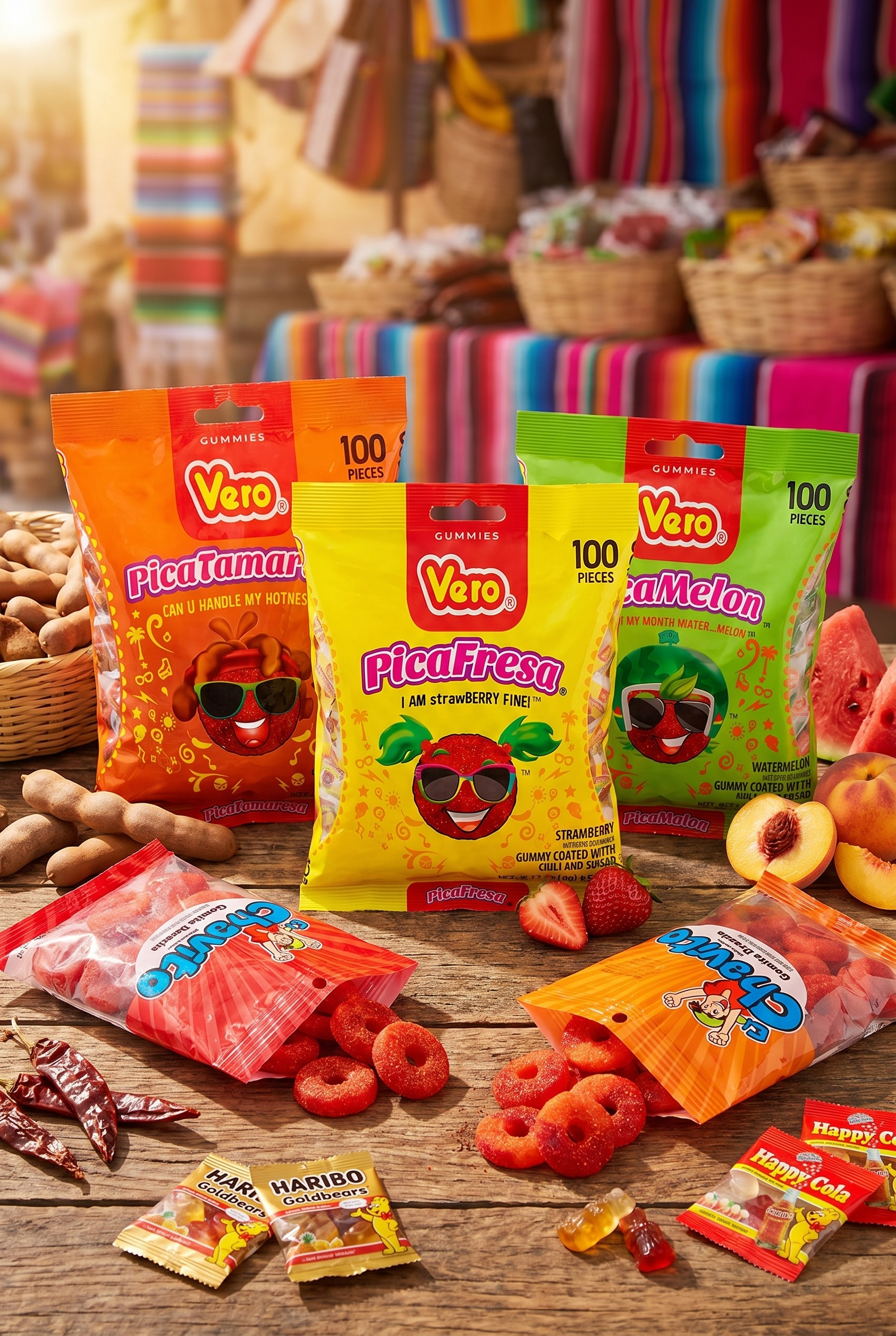
The fastest way to see the split is to put Vero PicaTamarind Tamarind Gummy 100pcs or El Chavito Gomita Sandia next to a Haribo bag. Haribo usually wants the chew to feel polished and familiar. Mexican gummies are much more willing to hit you with chile, salt, tart fruit, sticky coatings, and flavors that do not apologize for being specific. Tamarind tastes dark and punchy. Watermelon can taste loud on purpose. Peach gets help from chile instead of just extra sugar.
So when I ask whether Mexican gummies or Haribo wins, I am not asking which one is more famous. I am asking which one gives me a stronger reason to come back. If I want a safe classic chew, Haribo still has an argument. If I want a gummy with actual attitude, the Mexican side gets very hard to ignore very fast.
Texture tells you what each side cares about
Texture is where the fight gets real. Haribo is built on discipline. Haribo Twin Snakes 5oz has that firm, elastic chew that makes your jaw do a little work without turning the candy into a chore. It is neat. It is controlled. Even the sour bags keep that structure. If you grew up loving that bounce, it still scratches a very specific itch better than most brands do.
Mexican gummies usually care less about tidy and more about friction. Vero PicaFresa Strawberry Gummy 100pcs and Vero PicaMelon Watermelon Gummy 100pcs are better because the coating drags a little, the gummy center lands softer, and the whole bite feels more alive. El Chavito Gomita Durazno does something similar from a different angle. You get peachy sweetness, but the chile-lime edge keeps the bite from flattening into one generic gummy note.
That rougher edge matters more than people think. A lightly tacky coating slows the bite down, which means the sourness lands first, then the fruit, then the chile. Haribo usually gives you a cleaner single arc. Mexican gummies are more layered. I do not always want that. If I am mindlessly snacking during a movie, Haribo is easier. If I actually want the candy to stay interesting after five or six pieces, the Mexican texture logic has more staying power.
That is why I do not buy the lazy idea that “better gummy” just means “cleaner gummy.” Cleaner can also mean duller. Haribo nails consistency. Mexican gummies chase tension. One side feels engineered to please everybody. The other feels built for people who want the candy to push back a little. I honestly need both moods, but they are not interchangeable.
Mexican gummies usually win on flavor depth
Flavor is where Mexican gummies start pulling away for me. Haribo fruit flavors are usually easy to understand: bright, sweet, and friendly. That works. But the best Mexican gummies do not stop at fruit. Vero PicaTamarind has a darker tamarind profile with sourness, salt, and that little earthy edge that makes regular fruit gummies feel thin afterward. It is not trying to imitate candy-store cherry. It is doing its own thing, and that is exactly why I respect it.
Vero PicaMelon and El Chavito Gomita Sandia both make the same point in a more beginner-friendly way. Watermelon on the Mexican side is usually louder, saltier, and less interested in tasting like a melted red popsicle. The chile does not bury the fruit. It gives the fruit shape. Same with El Chavito Gomita Durazno, where peach finally gets some backbone instead of floating away as soft orange sugar.
Haribo still wins when I want a cleaner fruit read. Haribo Zing Sour Bites 4.5oz is proof that Haribo can do acid and still stay balanced. But even there, the ceiling is different. Haribo makes a good sour gummy. Mexican gummies make me stop and pay attention to what kind of sour, what kind of fruit, and what the chile is actually doing. That is a much more interesting conversation.
Haribo still wins some very real battles
To be fair, Haribo is not some washed classic that only survives on nostalgia. There are real reasons it keeps selling. Goldbears is still one of the easiest bags in the world to hand to a random group because nobody has to decode it. Twin Snakes is one of the smarter mainstream gummy formats because the sweet-sour pairing keeps a familiar chew from getting boring. If I am stocking a car, a desk drawer, or a movie snack pile for people with mixed taste, Haribo is the safer bet and I am not going to pretend otherwise.
Haribo also has a huge beginner advantage. If somebody says they hate spicy candy, hate sticky coatings, or just want something their kids will not side-eye, I am not tossing them straight into tamarind and chile. I am giving them Goldbears or Twin Snakes first. That matters because not every candy purchase needs to be a flavor thesis. Sometimes you just want a bag that will behave exactly like you expect.
That safety is also the limit. Haribo rarely makes me feel like I discovered something. It makes me feel like I bought a solid version of a format I already understand. There is value in that. Not every candy needs to be a personality test. But if the question is which side has more range once you get past the first handful, I do not think Haribo wins by default anymore.
My Haribo short list is simple: Goldbears for classic chew, Twin Snakes for the best balance, and Zing Sour Bites for the sharpest mainstream sour option. All solid. They just are not the bags that make me rethink the category.
The Mexican gummy lane has more personality and replay value
The Mexican side wins whenever I want flavor to feel less corporate and more specific. Vero PicaFresa is the strawberry gummy I reach for when I am tired of fake red candy pretending to be enough. It gives me fruit, tartness, and that chile-salt snap that keeps the bag from blurring together. Vero PicaTamarind is even better if you already know you like tamarind, because it tastes like an actual point of view instead of a focus-group compromise.
El Chavito Gomita Sandia is probably the easiest crossover buy for Haribo fans because watermelon gives you a familiar entry point while the coating teaches you what Mexican gummies are trying to do. Gomita Durazno is the pick I hand to people who think peach gummies are always soft and forgettable. It fixes that problem fast.
I like that the Mexican gummy bench is not one-note. PicaTamarind feels darker, PicaFresa brighter, and PicaMelon is the easiest bag to pass around. That range matters because Mexican gummies are not one flavor profile. They have beginner bags and deeper-cut cravings.
The bigger thing, though, is replay value. Mexican gummies keep changing as your tolerance for salt, sourness, and chile grows. A bag can go from “that is different” to “why am I craving this again” in about two sittings. Haribo usually gives you immediate comfort. Mexican gummies reward curiosity. Long term, curiosity wins more of my money.
My honest verdict and the first order I would actually place
So which flavor actually wins? If you mean universal crowd-pleaser, Haribo still takes that round. If you mean the side with more personality, better contrast, and a stronger reason to remember the bag tomorrow, I am giving it to Mexican gummies. That does not mean Haribo is bad. It means Haribo is the dependable baseline and the Mexican gummy lane is where the fun starts once you stop treating candy like it should always behave.
If you are buying your first side-by-side order from Snack Rack City, I would keep it brutally simple:
- Haribo Twin Snakes 5oz for the clean mainstream benchmark.
- Vero PicaTamarind for the strongest argument that fruit gummies can have real depth.
- El Chavito Gomita Sandia for the easiest crossover into the chile-sour lane.
- Haribo Zing Sour Bites if you want to see where mainstream sour still holds up.
If you want the safest path, start with Twin Snakes and Gomita Sandia. If you want the full argument fast, start with PicaTamarind and Zing Sour Bites back to back. You will feel the philosophy shift immediately.
That mix tells the whole story fast. Haribo gives you clean chew and consistency. Mexican gummies give you tension, salt, sourness, and a lot more personality. If I can only rebuy one lane for myself, I am taking the Mexican gummies and not feeling conflicted about it.
Featured Products


Related Reads
- Best Gummy Candy: I Tested Every Style From Haribo to Peelerz to Find the Winners
- Why Mexican Candy Tastes Stronger Than American Candy
- Pulparindo Flavors Ranked: From Safe Pick to Full Send
- Pelon Pelo Rico Explained: Why This Candy Still Hits
Frequently Asked Questions
What is the biggest difference between Mexican gummies and Haribo?
Haribo leans clean and fruity. Mexican gummies add chile, salt, tamarind, and rougher coatings, so the bite feels louder.
Are Mexican gummies always spicy?
No. The best ones balance sweet, sour, salt, and fruit; the chile is there to sharpen the candy.
Which Mexican gummy should beginners start with?
Start with El Chavito Gomita Sandia. The watermelon flavor is familiar, so the chile-sour coating feels easier.
Which Haribo bag is the best comparison point?
Haribo Twin Snakes. It shows Haribo's chewy, sweet-sour style without getting too bland or too weird.
What does tamarind gummy candy actually taste like?
Deeper and darker than standard fruit gummies, usually with sweetness, tartness, and a salty or chile finish.
What should I buy first from Snack Rack City if I want both lanes?
Start with Haribo Twin Snakes, then add Vero PicaTamarind and El Chavito Gomita Sandia for the clearest side-by-side.
Save this guide for later