How to Pack a Candy Care Package Without Crushed Snacks
Quick answer: A good candy care package is not just a pile of sweets in a box. Start with sturdy packaging, separate soft and brittle items, and give every product a reason to be there.
Start With the Box, Not the Candy
A candy care package fails before anyone tastes it if the box is doing nothing. I do not start by asking, what candy looks fun? I start by asking what has to survive being stacked, shifted, dropped on a porch, or carried in a backpack. That sounds less exciting than picking flavors, but it is the difference between a gift that opens cleanly and a bag of flattened snacks that feels like an apology.
The real goal is not making candy indestructible. Candy is still candy. The goal is choosing formats that already have some protection, then arranging them so the soft pieces are not carrying the weight of the whole package. Boxes belong near the bottom or edges. Tubs and jars need room so they do not grind into bags. Soft gummies and chews need a padded middle. Anything brittle needs its own little zone instead of being treated like packing filler.
Shop the guide
 Reading How to Pack a Candy Care Package Without Crushed Snacks? Start with Jolly Rancher Chews Original Flavors 2.06oz, then keep building from the same flavor lane.
Jolly Rancher Chews Original Flavors 2.06oz
Shop sour candy
Reading How to Pack a Candy Care Package Without Crushed Snacks? Start with Jolly Rancher Chews Original Flavors 2.06oz, then keep building from the same flavor lane.
Jolly Rancher Chews Original Flavors 2.06oz
Shop sour candy
Pick Formats That Bring Their Own Structure
For a candy care package, I trust packaging shape almost as much as flavor. A flat boxed candy can slide into the side wall of the package. A tub can handle more pressure than a thin bag. Individually wrapped pieces stay neater if the outer package gets tossed around. That is why I like using a mix instead of six soft bags that all need the same protection.
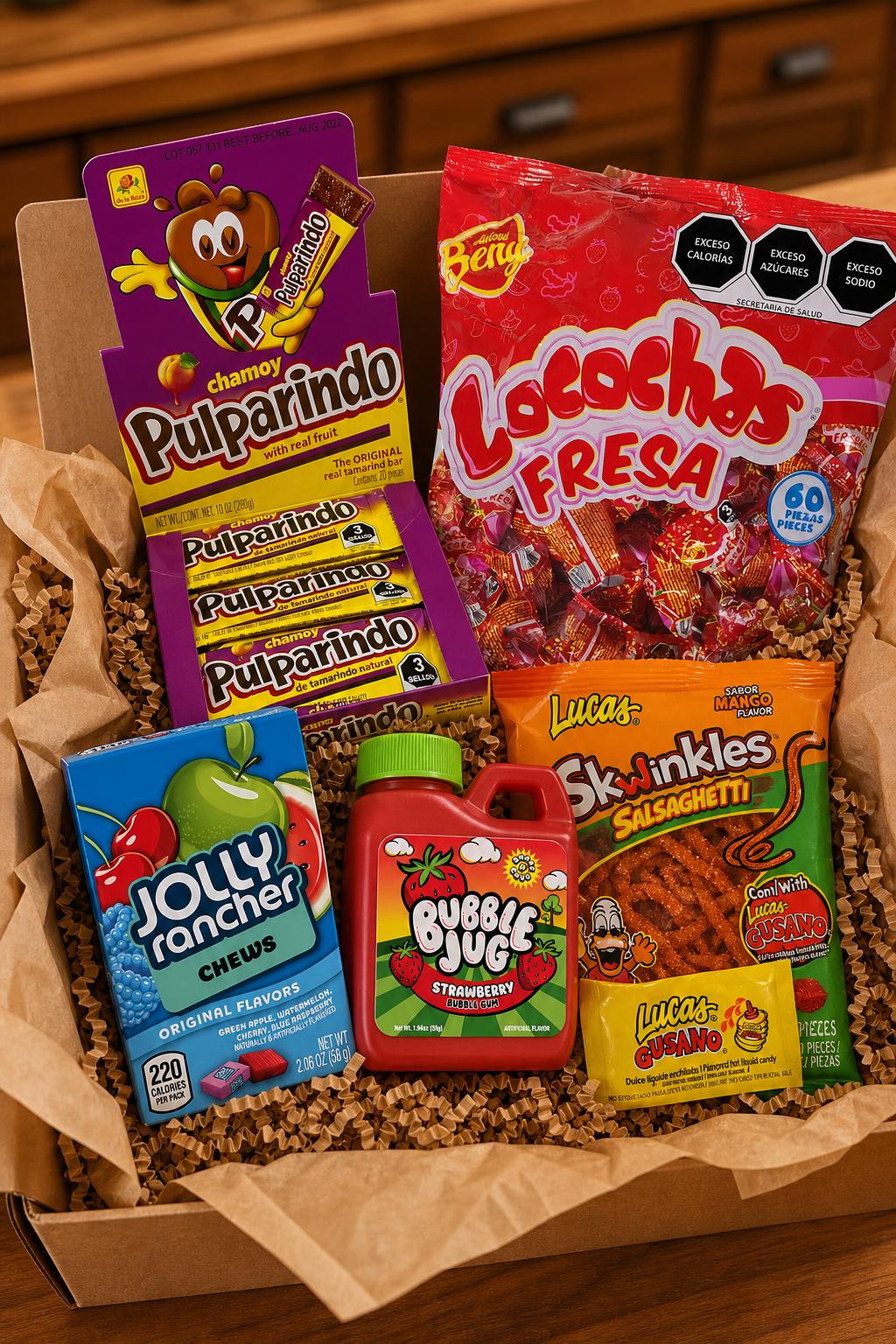
A box of Pulparindo Chamoy 20pcs is useful because it gives you flat, stackable structure and individually portioned bars. A tub like Bubble Jug Strawberry Bubble Gum brings a different kind of protection because the container itself does some of the work. I am not saying either one is impossible to damage. I am saying they give you a better starting point than a pile of delicate candy with no shape discipline.
Do Not Let Soft Candy Carry the Load
Soft candy is usually the emotional part of the box. It feels fun, colorful, and easy to snack on. It is also the part I protect most carefully. If you put a gummy bag at the bottom and stack boxed candy or a jar on top, you are basically asking the softest item to become a cushion. That is how candy gets mashed into one corner or arrives looking tired.
When I use something like Jolly Rancher Chews Original Flavors, I treat it as a middle-layer product. It can sit between sturdier items, but I do not bury it under a heavy box. The same logic applies to fruity gummies and chile-coated pieces. Keep soft products snug, not squeezed. You want them held in place by paper, tissue, or another light product, not pinned down by the hardest thing in the package.
Use Wrapped Pieces When Sharing Matters
Care packages are often shared even when they are addressed to one person. Roommates notice. Kids negotiate. Office friends suddenly appear. Wrapped pieces make that easier because the recipient can pull out a few without opening the whole package into chaos. They also help the box stay cleaner if something shifts around during the trip.
That is where a bag like Beny Locochas Fresa 60pcs makes sense. It is not a tiny one-bite novelty. It gives the package a shareable, individually wrapped hard candy lane without making the whole gift about heat or sourness. I would place it low or against a side wall, because the bag has weight and count. It can support the packing plan, but I still would not smash it into softer bags just because it feels sturdy.
Give Long or Awkward Packages a Job
Every care package has that one item with a shape that does not behave. Long packs, thin boxes, tall tubs, and loose bags can either make the package look messy or help organize it. I prefer to give those products a job. Put a longer package along the side as a border. Use a flat box as a base layer. Place a tub where it will not roll into something softer.
Lucas Skwinkles Salsaghetti Mango 12pcs is the kind of product I would use as a side or back-wall piece, not a random top throw-in. It brings a bigger Mexican candy format and a clear mango-chile personality, but its shape needs respect. If the box is narrow, slide it along the wall. If the box is wider, lay it flat and keep heavier items away from the middle.
Quick cart path
Use these article picks as the buying shortcut instead of searching the whole store.
Jolly Rancher Chews Original Flavors 2.06oz Pulparindo Chamoy 20pcs
 Lucas Skwinkles Salsaghetti Mango 12pcs
Balance Familiar Candy With One Bolder Pick
A care package should feel personal, but it should not feel like homework. If every item is unfamiliar, the recipient has to decode the whole box before enjoying it. If every item is familiar, it can feel like a gas-station run with postage. The sweet spot is a mix: one comfortable fruit chew, one shareable wrapped candy, one bolder Mexican candy format, and one playful texture that makes the package feel chosen.
That is why I would not build this box around only spicy candy or only gummies. Vero PicaFresa Strawberry Gummy 100pcs gives you a Mexican candy pick with strawberry and chile character, while Jolly Rancher Chews keeps the fruit side familiar. Pulparindo adds tamarind-chamoy depth. Bubble Jug adds a playful container. The package reads like a thoughtful mix instead of six versions of the same idea.
Build the Layers in a Practical Order
Here is the order I use. First, put a thin layer of crinkle paper or clean packing paper on the bottom. Second, place the sturdiest shapes near the base and corners: boxed Pulparindo, a gum tub, or a wrapped candy bag with enough structure. Third, slide longer packs along a side so they stop floating around. Fourth, put the softer chews and gummies in the middle, where they get protection from every direction. Fifth, add a light top layer so the products do not jump when the box moves.
I also leave less empty space than people think. Empty space is not kindness. Empty space is permission for the candy to travel inside the box. The package should close without forcing the lid down, but the products should not rattle when you gently shake it. If they do, add padding or remove one item. A smaller neat box beats a bigger loose box almost every time.
What I Would Avoid in This Package
I would avoid anything that needs perfect weather unless I know the package is staying cool. I would also avoid putting brittle snacks beside a heavy jar or stuffing soft candy into a corner to make room for one more product. More candy does not automatically make the care package better. It can make the opening worse if everything arrives bent, dusty, or jammed together.
I am also careful with powdery, dip-style, or squeeze candies when the recipient is not expecting them. They can be great, but they need the right person and the right packing setup. If I am sending to a dorm, office, hospital room, road-trip friend, or anyone with limited space, I want the first impression to be clean and easy. The bolder pick can be there, but it should not make the whole box harder to use.
Think About the Opening Moment
A care package is partly about the first ten seconds after the box opens. If the top layer is only filler, the gift feels unfinished. If the top layer is all heavy products, the recipient has to dig before anything feels fun. I like putting one colorful, recognizable item near the top, then letting the sturdier products do the hidden work underneath. That gives the package a better opening without making it fragile.
This is where restraint helps. Do not sprinkle loose candy into the box just to make it look fuller. It can get trapped in seams, pick up paper dust, or make the whole gift harder to clean up. Keep sealed products sealed. Use the product colors and shapes for the reveal. A bright pack of chews, a strawberry gum tub, and a Mexican candy box already give the package enough personality when they are placed with some intention.
Match the Package to the Recipient
The best packing plan still starts with the person getting the candy. For a college student, I would choose products that can be opened over several days without taking over the room. For a family box, I would lean harder on wrapped pieces and larger-count candy. For someone new to Mexican candy, I would keep the bolder flavors present but not overwhelming. The structure stays the same, but the emphasis changes.
That is why I like this kind of mix. Bubble Jug and Jolly Rancher Chews feel easy for almost anyone to understand. Pulparindo, Skwinkles, Locochas, and PicaFresa bring the SRC personality without forcing one flavor profile to carry the whole package. The recipient gets choices, and the box still has a packing logic. It feels like a gift, not an inventory dump.
My Actual Care Package Rule
My rule is simple: every product needs either a flavor job or a packing job. If it does neither, it does not belong in the care package. Jolly Rancher Chews gives familiar fruit. Pulparindo Chamoy gives a flat Mexican candy format with sharper personality. Lucas Skwinkles gives the box a bigger interactive moment. Beny Locochas gives shareable wrapped pieces. Bubble Jug gives a sturdy playful container. Vero PicaFresa gives strawberry-chile texture in a larger count.
That mix works because the products are not all trying to be the same kind of snack. They also do not all need the same protection. When the formats are different, packing gets easier and the gift feels more intentional. That is the point. A good candy care package should open like someone thought about it, not like someone panic-bought the loudest bags and hoped cardboard would solve the rest.
Turn this read into a cart

Start with 6 linked picks from this guide, then add one safe pick and one discovery pick so the order has range.
Shop sour candyFeatured Products


Related Reads
- How to Keep Opened Gummy Candy from Turning Sticky
- Imported Candy Snack Drawer Ideas That Stay Useful
- How to Choose Imported Candy When Labels Feel Unclear
- Game Night Candy That Won't Coat Your Cards or Dice
Frequently Asked Questions
What kind of candy works best in a care package?
I start with candy that has its own structure: boxes, tubs, jars, wrapped pieces, and firmer bags. Those formats are easier to protect than loose, delicate, or very soft pieces.
Should chocolate go in a candy care package?
Only when the weather and delivery timing make sense. If heat is a real concern, I would lean on gummies, chews, wrapped hard candy, sour belts, and Mexican candy formats instead.
How do I keep soft candy from getting smashed?
Do not place it under boxes or jars. Put soft bags in the middle layer, surround them with padding, and keep heavier products tight against the bottom or sides.
Is a padded mailer enough for candy?
A padded mailer can work for flat, sturdy items, but I prefer a small box when the order includes tubs, jars, brittle cookies, or anything I actually care about presenting cleanly.
How many candy products should I send?
Five or six is usually enough for a care package that feels intentional. More than that can turn into clutter unless every item has a different texture, package shape, or eating moment.
Can I mix Mexican candy with regular American candy?
Yes, and I usually like that better. The trick is to balance familiar fruit chews with one or two bolder Mexican candy formats so the box feels personal instead of random.
Save this guide for later