Imported Candy Snack Drawer Ideas That Stay Useful
Quick answer: A good imported candy snack drawer is not just a pile of bright wrappers. I sort by packaging, texture, mess level, and who is grabbing from it so the good stuff actually gets eaten.
Start with the Problem the Drawer Has to Solve
An imported candy snack drawer sounds simple until it becomes the place where half-open bags, odd single pieces, and mystery wrappers go to disappear. I do not like that kind of drawer. It wastes good candy, hides the interesting stuff, and makes every snack break feel like digging through a junk bin. A useful drawer has a job: make the next good bite easy to find.
The fix is not buying a massive set of containers or pretending every wrapper needs a label. I organize by how the candy behaves when someone grabs it. Is it a soft bag that can slump open? A small powder pack that should stay upright? A box that protects crunchy pieces? A sour belt that needs its own space so it does not get crushed? Once you think that way, the drawer stops being random and starts working like a tiny snack station.
This matters more with imported candy because the formats are less predictable if you did not grow up buying them every week. A shopper may recognize the fruit on the package but not know whether the candy is chewy, dusty, crunchy, dipped, sour, creamy, or meant to be eaten slowly. The drawer can answer that question visually before anybody has to read fine print.
Shop the guide
 Reading Imported Candy Snack Drawer Ideas That Stay Useful? Start with Peelerz Gummy - Peelable Strawberry Gummy 6oz, then keep building from the same flavor lane.
Peelerz Gummy - Peelable Strawberry Gummy 6oz
Shop sour candy
Reading Imported Candy Snack Drawer Ideas That Stay Useful? Start with Peelerz Gummy - Peelable Strawberry Gummy 6oz, then keep building from the same flavor lane.
Peelerz Gummy - Peelable Strawberry Gummy 6oz
Shop sour candy
Pick the Texture Groups Before You Pick the Products
The worst version of a snack drawer is six candies that all eat the same. Six gummy bags may look colorful, but by the third reach you are basically choosing wrapper art. I like to build sections around texture first: peelable or chewy, powdery or dip-style, crunchy, stretchy sour, novelty interactive, and gum. That mix gives people real choices without turning the drawer into a full pantry project.
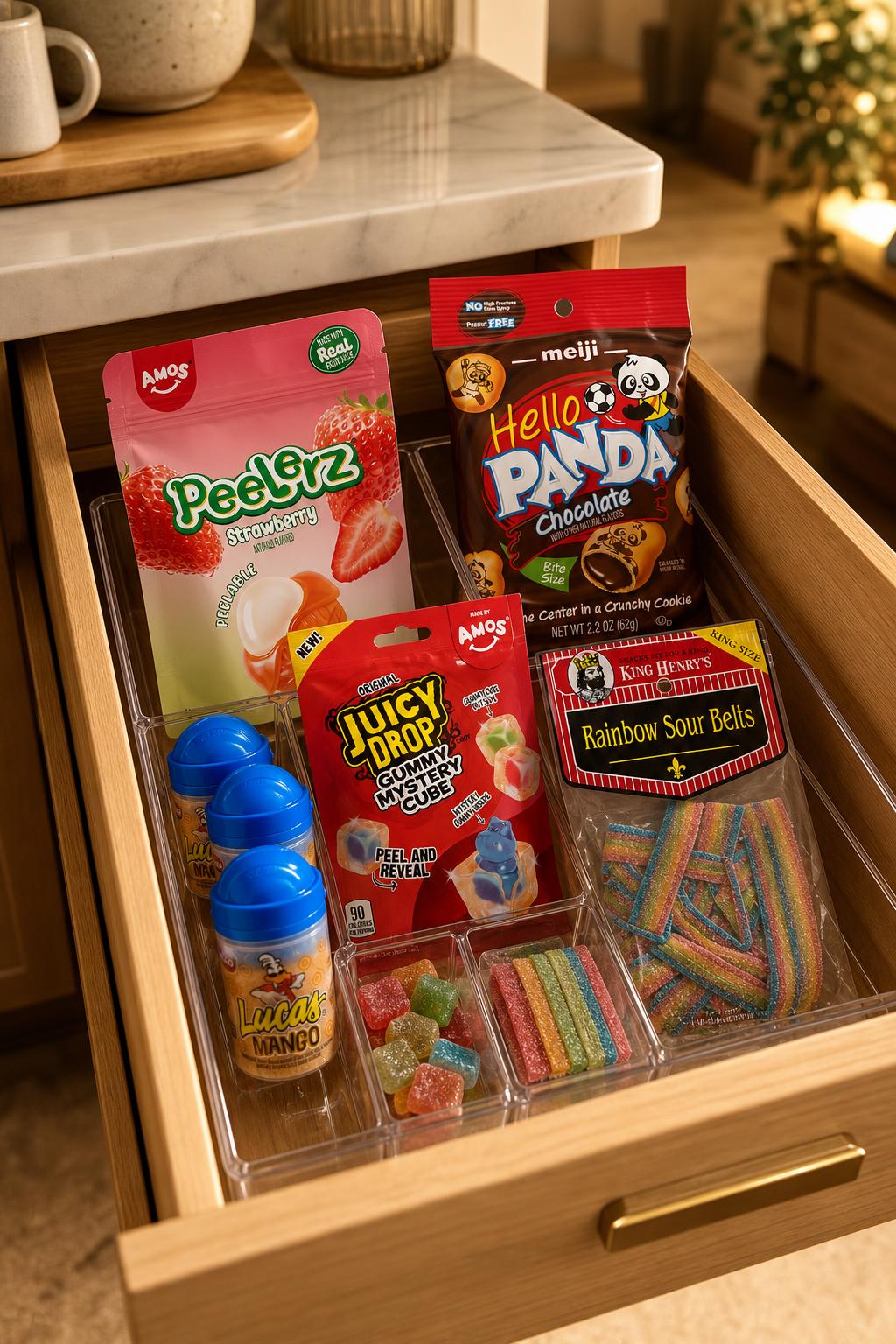
For the peelable spot, Peelerz Gummy Peelable Strawberry earns its place because the whole point is texture. It is not just another soft fruit gummy bag. It gives the drawer one novelty piece that people actually notice when they open it. I would not stack three peelable flavors together in a small drawer, though. One strong texture signal is enough.
Keep Powder and Dip Candy Easy to Grab
Powder candy needs a little respect. If you bury it under heavier bags, it gets ignored or knocked around. If you leave it loose with everything else, it makes the drawer feel messy even when nothing has spilled. I give powder, dip, and small interactive pieces a front corner because they are usually chosen on purpose. Nobody casually grabs a powder candy the same way they grab a chocolate bar.
Baby Lucas Mango 3pcs is a good example of why this matters. The small packs are easy to lose in a crowded drawer, but they make sense in a little upright section with other grab-and-go items. I keep that zone near the front so the person who wants mango powder does not have to move every gummy bag to find it.
Give Crunch Its Own Protected Spot
Crunchy snacks should not be treated like gummy bags. Boxes and cookies need a spot where they are not getting bent under heavier products. That does not mean a precious display shelf. It just means one side of the drawer where the rigid packaging can stand or lie flat without being crushed every time somebody closes the drawer too fast.
I like Meiji Hello Panda Chocolate Cookies in this role because the box clearly announces a different eating experience. It is not sour, sticky, stretchy, or powdery. It gives the drawer a calmer crunchy option for the person who wants chocolate flavor without opening a loose candy bag. In a mixed imported candy drawer, that contrast matters more than people admit.
Separate Interactive Candy from Passive Candy
Some candy is passive. You open it, eat it, and move on. Some candy is interactive, and that changes where it belongs. Interactive candy has parts, movement, dipping, squeezing, peeling, or some built-in ritual. It can be fun, but it should not be scattered through every section because then the drawer feels busy instead of useful.
Juicy Drop Gummy Mystery Cube Original belongs in the interactive zone. I would place it near Peelerz, not because they taste the same, but because they both ask for attention. That gives the drawer one clear area for the fun stuff and leaves the rest of the space for easier everyday grabbing. It is a small decision that keeps novelty from swallowing the whole drawer.
Quick cart path
Use these article picks as the buying shortcut instead of searching the whole store.
Peelerz Gummy - Peelable Strawberry Gummy 6oz Baby Lucas Mango 3pcs
 Meiji Hello Panda Chocolate Cookies 2.2oz
Use Long Candy to Create a Clean Border
Long candy is awkward in a drawer if you treat it like a loose bag. Sour belts, ropes, strips, and similar formats can slide around, fold badly, or end up underneath everything else. I like using them as a border along one side or the back. That sounds overly specific, but it works. The package shape helps define the drawer instead of fighting it.
King Henry's Rainbow Sour Belts are the kind of product I would keep flat or slightly angled along an edge. They bring color, sourness, and a pull-apart feel, but they do not need to sit on top of everything. When long candy has a defined home, it stays visible and the drawer still closes like a normal drawer, which is the whole point.
Do Not Ignore the Odd Little Pieces
Every snack drawer needs a tiny-item rule. Small packs are the first things to vanish under bigger bags, and then someone finds them weeks later and acts surprised. I keep small candy, gum, and single-serve oddballs in one shallow front section. That makes them easy to grab when you only want one small thing, and it keeps the drawer from turning into a wrapper avalanche.
For that slot, Big League Chew Outta Here Original Baseball Gumballs works because it is compact, different, and not trying to compete with the larger bags. I would not hide it behind a cookie box or under sour belts. Tiny products are only useful when people can see them before they commit to opening something bigger.
The same rule helps with the last few pieces from any multipack. If there are two pieces left, they should move forward, not sink to the back. That little rotation keeps the drawer honest. You eat what is already open before pretending the next unopened bag is the only interesting option.
My Actual Drawer Layout
Here is the layout I would use: front left for small packs and powders, front right for gum or single-serve pieces, one side for long sour candy, one protected corner for boxes, and the middle for soft bags. That arrangement sounds plain because it is supposed to be plain. The drawer should help you snack, not force you to admire a color-coded system every time you want candy.
The important part is avoiding duplicate jobs. Peelerz handles peelable texture. Baby Lucas handles powder. Hello Panda handles crunch. Juicy Drop handles interactive candy. King Henry's belts handle long sour pull. Big League Chew handles the small gum slot. That is six products, six different drawer jobs, and no fake variety. When the drawer is built this way, you can add or remove items later without starting over.
I also put the most fragile packaging where hands will not constantly press down on it. Boxes do better on an edge. Soft bags do fine in the middle if they are not overloaded. Tiny pieces deserve the front. If a product has a cap, lid, dipper, or loose accessory, I do not let it roam around. It gets a small contained area because losing the fun part of an interactive candy is a deeply annoying way to ruin it.
What I Would Not Put Together
I would not cram every trending candy into one drawer just because the packages look loud. That is how people end up with five bags that all promise sour fruit and one lonely powder pack nobody can find. I would also avoid mixing open soft bags with tiny packs unless the open bag is clipped or folded cleanly. A snack drawer should feel inviting, not like a checkout counter collapsed into your kitchen.
I am also careful with anything that needs extra care after opening. If a product is likely to get sticky, stale, crushed, or lost once the original package is open, it needs a plan before it goes in the drawer. That plan can be as simple as a clip, a small bin, or a rule that it stays upright. Boring? Maybe. Useful? Absolutely.
The Useful Rule: One Candy, One Reason
My rule for an imported candy snack drawer is one candy, one reason. If two products are doing the same job, one of them can wait for the next order. That rule keeps the drawer tighter, makes shopping easier, and prevents the classic mistake of buying variety that only looks different on the outside.
Before I reorder, I look at what disappeared first and what sat untouched. That is better than guessing from packaging alone. If crunchy cookies vanished, the drawer needs another protected box. If powders stayed put, maybe the household only wants them once in a while. If sour belts got finished fast, that texture earned more space. The drawer is not a personality test. It is evidence.
This is where imported and novelty candy gets fun in a real way. You can build a drawer around texture, format, and mood instead of chasing a perfect theme. Some days you want sour belts. Some days you want a crunchy cookie box. Some days you want mango powder because subtle is not the assignment. Give every product a clear spot and a clear reason, and the drawer will keep earning its space.
Turn this read into a cart

Start with 6 linked picks from this guide, then add one safe pick and one discovery pick so the order has range.
Shop sour candyFeatured Products


Related Reads
- How to Choose Imported Candy When Labels Feel Unclear
- How to Keep Opened Gummy Candy from Turning Sticky
- The Candy Textures Taking Over Candy Aisles Right Now
- Why Mazapan Crumbles: A Practical SRC Texture Guide
Frequently Asked Questions
What should go in an imported candy snack drawer first?
Start with formats you can identify quickly: one gummy, one powder or dip, one crunchy cookie, one sour strip or belt, and one wrapped or sealed novelty candy. That gives the drawer range without turning it into clutter.
Should I organize candy by country, brand, or texture?
For everyday snacking, texture usually works better than country or brand. People reach for chewy, crunchy, sour, powdery, or interactive candy before they think in perfect product categories.
How do I keep gummies from taking over the whole drawer?
Give gummies one fixed section and stop there. Peelable gummies, sour gummies, and classic gummies can look different, but if they all live loose in the same space, the drawer starts feeling repetitive fast.
Are powder candies messy in a snack drawer?
They can be if they are tossed in carelessly. I keep powder and dip candies in their own front corner or small bin so they are easy to grab and less likely to get buried under soft bags.
How many products are enough for a useful candy drawer?
Five or six well-chosen products are enough for a normal home drawer. More than that can work, but only if the formats are genuinely different and the drawer still closes cleanly.
Do I need special containers for candy organization?
No. A few drawer dividers or small open bins help, but the real trick is deciding what each section is for. Packaging, mess level, and texture matter more than fancy containers.
Save this guide for later