Mazapán Explained: Why De La Rosa Still Owns This Lane
Quick answer: De La Rosa Mazapán tastes like roasted peanuts first, which is why it still wins.
Mazapán is simple, and that is exactly why it still works
Mazapán is one of the easiest ways to explain why Mexican candy hits different without dragging somebody straight into tamarind, chamoy, or chile powder. Hand them De La Rosa Mazapán Original 30pcs and the point lands fast. It is just roasted peanut candy pressed into a little disc, but it tastes like the peanut actually got a vote. That should not be a radical concept. Somehow it still is.
A lot of American peanut candy gets buried under chocolate, corn syrup, or nougat padding because big brands are obsessed with making everything smooth, safe, and focus-group approved. Mazapán goes the other direction. It is dry, crumbly, direct, and honest. If you are expecting a peanut butter cup clone, you are already asking the wrong question. This is not trying to be richer by adding more layers. It is trying to taste unmistakably like peanuts first.
That stripped-down confidence is why I still think mazapán matters. It does not need gimmicks, acid, or heat to feel specific. It just needs good roasted peanut flavor and the nerve to leave the texture alone instead of polishing everything into candy beige. That is a big part of why De La Rosa still owns this lane.
It is also one of my favorite beginner products because nobody has to decode it first. You taste peanuts, sugar, and that soft collapse right away. Then you can decide whether you want to stay in the sweeter Mexican candy lane or move into wilder territory later. Mazapán is not training wheels. It is just clear enough to make the rest of the aisle easier to understand.
That is a better on-ramp than another fake-extreme gummy with nothing real to say.
De La Rosa tastes like peanuts first and sugar second
The first good thing about De La Rosa Mazapán is that the roasted peanut note shows up immediately. Not peanut-adjacent. Not peanut flavored. Actual toasted peanut depth. The sweetness is there, but it is supporting the main ingredient instead of stepping on it. That sounds basic until you remember how many candy brands flatten nut flavor into a generic sweet paste and call it a day.
I also like that mazapán is not pretending to be indulgent in the American candy-bar sense. There is no fake luxury move here. No caramel waterfall. No chocolate shell trying to make the product feel bigger than it is. De La Rosa is tiny, a little messy, and over fast. That is part of the charm. You get a concentrated peanut hit, and then you decide whether you want another one instead of being trapped in a king-size sugar brick.
If you want the cleanest argument for why specific candy beats corporate overengineering, mazapán is one of my favorite examples. It is not broader than mainstream peanut candy. It is better because it is narrower. It knows its job and does not waste your time.
That smaller format matters more than people think. A full tray lets you share, compare, and keep a few around without turning snack time into a giant commitment. Mazapán is one of those candies that makes a sharper impression in two bites than most oversized peanut bars make in ten. I respect that economy. It tastes confident instead of padded.
The crumbly texture is not a flaw. It is the whole point
People who bounce off mazapán usually do it for one reason: they think the crumble means something went wrong. It did not. That sandy, fragile break is the whole experience. When a disc falls apart in your fingers, then melts down into roasted peanut sweetness in your mouth, it tastes more vivid because the texture gets out of the way fast. A chewy peanut candy has to keep proving itself. Mazapán lands and disappears before it can get boring.
That texture also makes the candy feel more homemade and less industrial, even when you are buying a classic tray from a major brand. I mean that as a compliment. I am tired of candy that feels engineered to survive three board meetings and a vending machine drop test. Some products should be a little delicate. Mazapán earns that fragility because it gives you a cleaner peanut finish in return.
So yes, keep it level if you do not want it shattered in the bag. But do not confuse fragile with bad. A lot of the best textures in Mexican candy are a little unruly. Mazapán just happens to be the quiet version of that lesson.
It also changes how you eat it. Some people bite straight through it. I usually break it in half over the wrapper and let the pieces fall apart on purpose. That little mess is part of the fun. The candy feels more tactile and personal than factory-perfect peanut sweets that arrive intact but never actually leave a memory.
If mazapán clicks for you, Duvalin is the smart next move
Once somebody likes mazapán, I usually do not send them toward a random peanut bar. I send them toward creamy Mexican sweets that keep the same nostalgic, specific energy. Ricolino Duvalin Tri Sabor 18pcs is the easiest bridge because it is sweet, familiar, and still very much its own thing. You get that little spoon, the soft texture, and the mix of hazelnut, strawberry, and vanilla that feels playful without being fake-fancy.
Duvalin Hazelnut-Strawberry 18pcs is the better pick if you want the fruit note to matter more, while Duvalin Strawberry-Vanilla 18pcs stays softer and sweeter. None of them taste like mazapán, and that is fine. The connection is not flavor duplication. It is attitude. These candies are specific, nostalgic, and unashamedly built around a distinct format instead of trying to copy whatever sells at every gas station in America.
If mazapán is the roasted peanut thesis statement, Duvalin is the creamy side quest that proves Mexican sweets can feel fun and personal without leaning on sour shock value.
Duvalin also has that anti-corporate honesty I love in Mexican candy. It does not act premium. It does not pretend the plastic spoon is some luxury flourish. It is just a smart, nostalgic format that works. You open it, scoop it, and get flavor fast. That directness is the same reason mazapán still beats fancier-looking competitors for me.
Obleas con cajeta is the underrated follow-up nobody talks about enough
The sleeper follow-up here is Aldama Obleas con Cajeta 20pcs. If mazapán taught you that Mexican candy can be sweet without being generic, obleas prove the same thing in a lighter format. Thin wafers, milk-caramel filling, almost no visual drama, and still way more personality than a bunch of mass-market wafer candy that tastes like sweet drywall.
I like obleas after mazapán because the texture contrast is immediate. Mazapán crumbles dense and sandy. Obleas crack light and airy, then give way to cajeta. That makes it a smart second buy if you are trying to understand the sweeter side of Mexican candy without repeating yourself. It is also a good reminder that not every great Mexican candy recommendation needs to end in chile dust or a tamarind dare.
Honestly, this is where generic candy blogs lose me. They talk about Mexican candy like the only story is spicy versus not spicy. That is lazy. Mazapán and obleas are proof that the sweet lane has just as much identity when you stop flattening the whole category into novelty content.
I wish more people talked about that instead of treating these products like side notes. Obleas are one of the best examples of Mexican candy being delicate without being bland. The wafers stay light, the cajeta brings enough depth to matter, and the whole thing feels distinct from both American wafer bars and generic caramel candy. That kind of specificity deserves more respect.
My honest first order if you want the mazapán lane to make sense fast
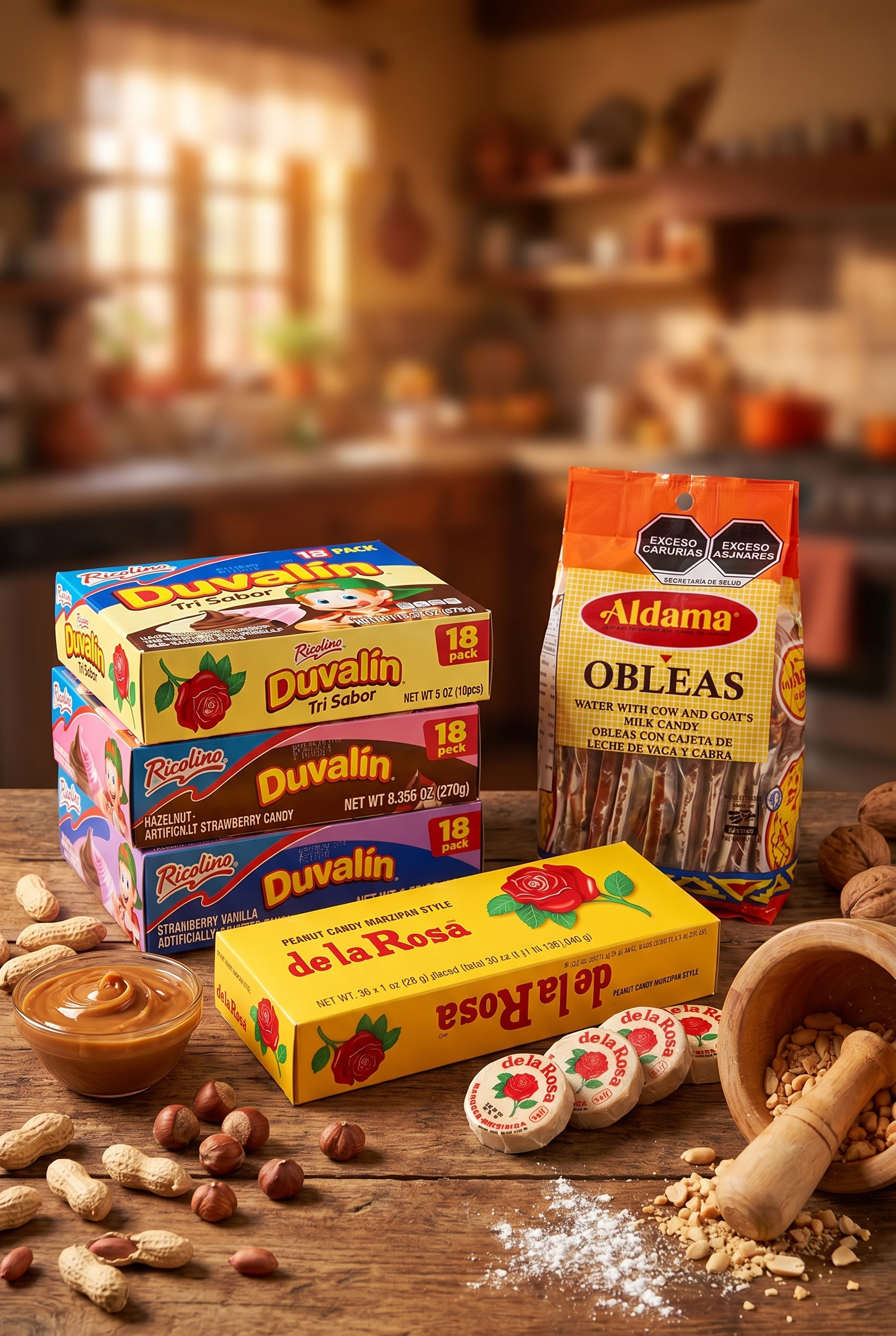
If I were building the cleanest possible first order around this flavor lane, I would start with De La Rosa Mazapán Original 30pcs, Duvalin Tri Sabor 18pcs, and Aldama Obleas con Cajeta 20pcs. That gives you the roasted peanut anchor, the creamy spoonable candy, and the wafer-cajeta contrast without turning the cart into a duplicate pile.
- Buy De La Rosa first if you want the purest explanation of why mazapán still matters.
- Buy Duvalin Tri Sabor first if you want the most iconic creamy follow-up.
- Buy Duvalin Hazelnut-Strawberry first if you want a sweeter, fruitier lane.
- Buy Duvalin Strawberry-Vanilla first if you want the softest nostalgia hit.
- Buy Obleas con Cajeta first if you want something lighter that still feels unmistakably Mexican.
That is the real point of this whole guide. Mazapán is not famous because it is flashy. It lasts because it is specific, cheap enough to try, and honest about what it is. In a candy world full of overbuilt products trying to impress you with extra layers and louder packaging, that kind of clarity still hits.
If you only like candy when it is chewy, chocolate-covered, or aggressively rich, mazapán may not be your thing. That is fine. But if you care about direct flavor and textures that feel a little more human than corporate, this lane makes sense immediately. It is one of the clearest reminders that candy does not have to be complicated to feel memorable.
Featured Products


Related Reads
- Why Mexican Candy Tastes Stronger Than American Candy
- Best Mexican Candy for Beginners: Your Guide to Authentic Flavors (No Regrets)
- 30 Mexican Candies Every 90s Kid Remembers (That You Can Still Get)
Frequently Asked Questions
What is mazapán?
A crumbly roasted peanut candy disc.
Is mazapán spicy?
No. It is sweet and nutty, not hot.
Why is it so crumbly?
That pressed texture is the point, not a defect.
Does it taste like peanut butter?
Only loosely. It is drier and more roasted.
What should I try after mazapán?
Duvalin or obleas are the best next buys.
How should I store it?
Keep it cool, dry, and out of rough handling.
Save this guide for later